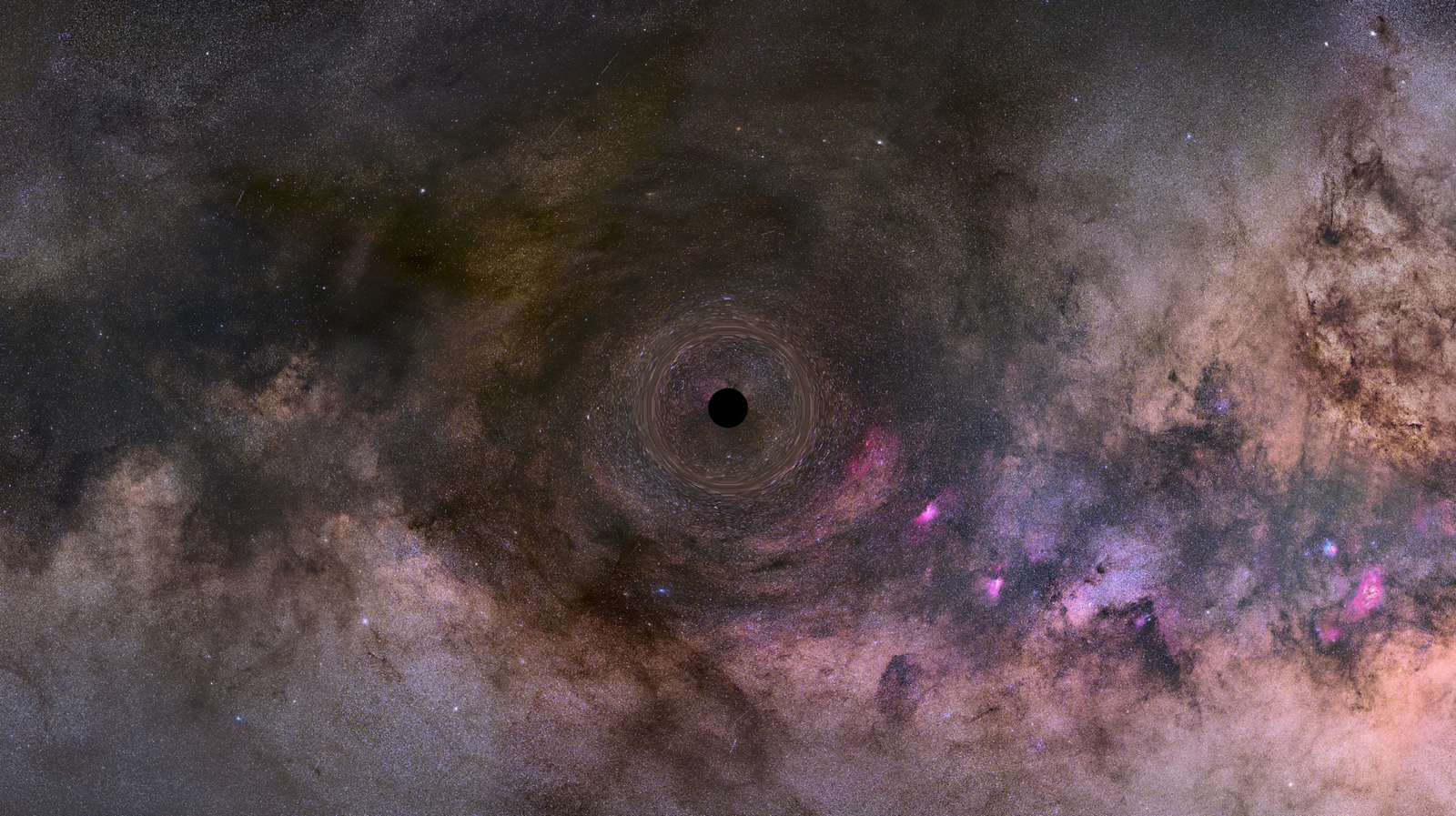
Why do black holes have no hair? Take two black holes. One formed when a massive star made almost entirely of hydrogen and helium ran out of fuel and collapsed under its own gravity. The other formed when two neutron stars, packed with iron and heavier elements, spiraled together and merged.
Measure the mass, spin, and electric charge of each remnant, and there is no way to tell which one came from a dying star and which came from a neutron star collision. Every other detail about the matter that fell in, its composition, its shape, its history, has vanished from the outside universe. That single fact is the reason physicists ask why do black holes have no hair, and the answer is one of the cleanest, best tested results in general relativity.
Why Do Black Holes Have No Hair? The Three Numbers That Describe Any Black Hole
The Event Horizon Telescope collaboration describes the spacetime around a black hole using only three measurable quantities: its mass, its spin, and its electric charge. Physicists call this the no hair theorem, also known as the black hole uniqueness theorem. Once a black hole settles down after forming, every other property of the material that created it becomes permanently inaccessible to anyone watching from outside.
In real astrophysical settings, the count shrinks further still. Black holes are usually surrounded by gas, plasma, and other charged particles, and a LIGO Scientific Collaboration science summary notes that any net electric charge a black hole picks up gets neutralized almost immediately by that surrounding environment. That leaves mass and spin as the two numbers that actually matter for describing a real black hole in space, which is the practical answer to why do black holes have no hair for anything astronomers actually observe.
The Physics Behind the Phrase
The phrase itself comes from physicist John Archibald Wheeler, credited by a National Academy of Sciences biographical memoir with popularizing “a black hole has no hair” as shorthand for these uniqueness theorems. The Linda Hall Library puts the idea plainly: when anything crosses a black hole’s event horizon, its entire personal history is wiped out, except for its mass, charge, and angular momentum.
“Hair” here is a metaphor for all the extra information a normal object carries: its exact shape, its magnetic field pattern, the specific arrangement of the atoms that make it up. A star has plenty of hair in this sense. A black hole does not.
The black hole can be characterized by its mass and spin alone.
Event Horizon Telescope Collaboration
How the No Hair Theorem Was Proved, One Case at a Time
The no hair theorem was not discovered all at once. It came together in stages, each covering a different type of black hole.
Physicist Roy Kerr found the exact mathematical solution for a spinning, uncharged black hole in 1963, according to a historical overview published by the American Physical Society. Two years later, that solution was extended to include electric charge, producing what is now called the Kerr Newman metric, documented in detail by Scholarpedia. In 1967, Werner Israel proved that a black hole with no spin and no charge has to be a Schwarzschild black hole, meaning it can only be described by its mass, a result the American Physical Society calls a demonstration that Schwarzschild black holes have no “hair” beyond their mass. The result was soon extended to spinning and electrically charged black holes as well.
The final piece came in the early 1980s. Physicists Pawel Mazur and Gary Bunting independently completed the general proof for stationary, axisymmetric black holes governed by the Einstein Maxwell equations. Their work showed these black holes must belong to the Kerr Newman family and are fully described by mass, angular momentum, and electric charge. Even so, mathematicians still call the fully general case the no hair conjecture rather than a theorem, since no single rigorous proof covers every possible scenario, a point Physics World has noted.
Testing the No Hair Theorem with Gravitational Waves
For decades, the no hair theorem was a mathematical result with no direct experimental test. That changed in September 2015, when the LIGO detectors picked up gravitational waves from two merging black holes for the first time, an event known as GW150914, as described by NASA’s Jet Propulsion Laboratory. This detection, alongside other experiments confirming general relativity, opened a new way to study black holes directly.
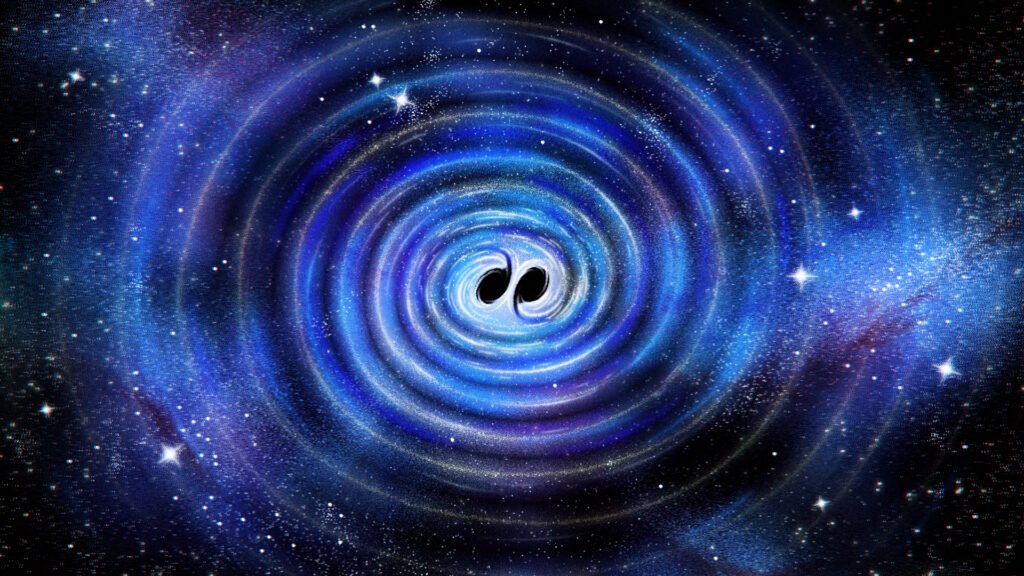
In 2019, a team led by Maximiliano Isi at MIT analyzed the ringdown signal, the brief period right after the merger when the newly formed black hole vibrates like a struck bell. They found overtone frequencies matching what the no hair theorem predicts for a black hole with the merger’s measured mass and spin, a result published in Physical Review Letters. Isi told Astronomy Now that the analysis amounted to the first experimental measurement to directly test the no hair theorem.
The agreement held to within about 20 percent, leaving room for future measurements to tighten the test. LIGO’s own summary of a more recent event notes that GW250114, observed in 2025, provided the most precise confirmation yet of Einstein’s predictions for black hole ringdown.
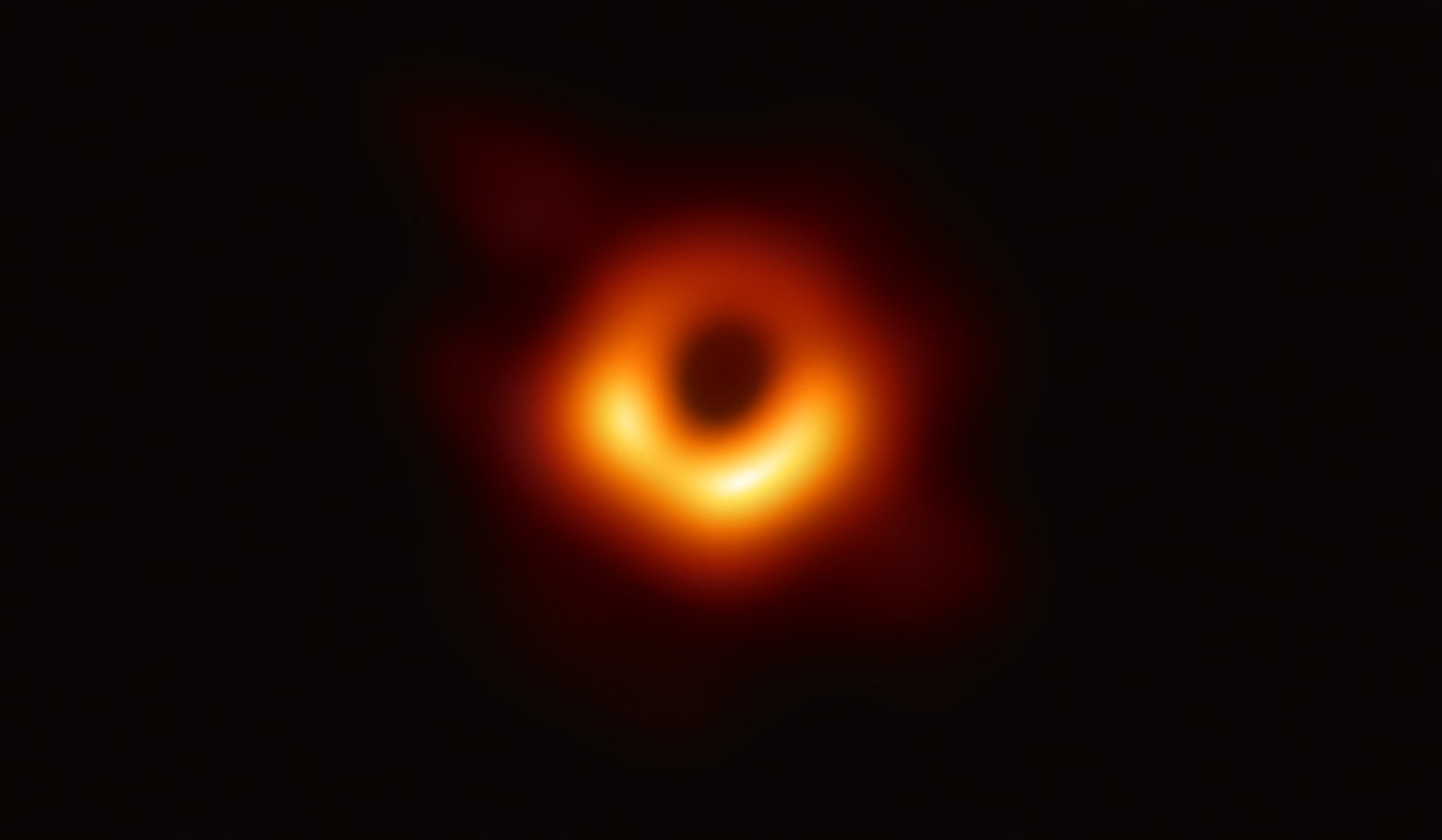
Separately, the Event Horizon Telescope’s 2019 image of the black hole at the center of galaxy M87 produced a mass estimate of roughly 6.5 billion times the mass of the Sun, consistent with predictions for a Kerr black hole and offering an independent, non gravitational wave check on the same idea.
Where the No Hair Theorem Still Has Limits
It helps to be precise about what is settled and what is not. The no hair theorem’s predictions have held up in every gravitational wave and black hole imaging test conducted so far, and it remains a direct consequence of Einstein’s equations for the black holes we can observe. But a complete, fully general mathematical proof covering every conceivable scenario still does not exist, which is why researchers continue to call it a conjecture in its most general form.
The theorem also does not hold universally once extra dimensions of space enter the picture. In mathematical models with more than four spacetime dimensions, solutions called black rings have been found that carry more information than mass, spin, and charge alone. The no hair property, in other words, is a feature of our four dimensional universe, not a law that applies to gravity everywhere. It’s a reminder that even the universe we can observe may only be telling part of the story.
There is also an open, unresolved connection to the black hole information paradox: what ultimately happens to the information carried by matter that falls into a black hole. Physics World points out that the no hair theorem implies this information is lost, while quantum theory says information cannot be destroyed. That contradiction remains an active area of theoretical research rather than a settled question.
Why This Matters
Every gravitational wave detection and every black hole image tests why do black holes have no hair in the first place. If a future observation ever found a black hole whose ringdown frequencies or shadow shape did not match the predictions of mass and spin alone, it would point to physics beyond general relativity, perhaps new particles, new fields, or a breakdown of Einstein’s equations under extreme gravity. So far, every test has come back consistent with the simple picture, which is itself a remarkable statement about how orderly the universe becomes once matter crosses an event horizon.
Key Takeaways
- The no hair theorem states that a stationary black hole can be fully described by only three measurable properties: mass, spin, and electric charge.
- In real astrophysical environments, electric charge is expected to neutralize quickly, leaving mass and spin as the two properties that matter in practice.
- Physicist John Archibald Wheeler popularized the phrase “black holes have no hair” to summarize decades of uniqueness proofs by Roy Kerr, Werner Israel, and others between 1963 and the early 1980s.
- The 2015 LIGO detection of merging black holes, and its 2019 ringdown analysis, provided the first direct experimental test of the theorem, with results consistent with predictions.
- The theorem remains a mathematical conjecture in its most general form, and it is known to fail in models with more than four spacetime dimensions.
FAQs
Does the no hair theorem mean black holes have no properties at all?
No. It means a black hole has exactly three externally measurable properties: mass, angular momentum, and electric charge. Everything else about the matter that formed it is not observable from outside.
Has the no hair theorem ever been proven mathematically for every possible case?
Not fully. Individual cases, such as non spinning uncharged black holes and the general charged, rotating case, have been proven. But no single proof covers every conceivable scenario, which is why it is still referred to as a conjecture in its most general form.
Can a black hole’s electric charge actually be measured?
In principle, yes, but astrophysical black holes are expected to have their charge neutralized almost immediately by surrounding plasma, making mass and spin the two properties that are realistically observable.
What would happen if scientists found a black hole that violated the no hair theorem?
It would suggest general relativity is incomplete under extreme gravity, potentially pointing to new physics, new particles, or modifications to Einstein’s equations. No such violation has been observed so far.
References
- Event Horizon Telescope, Testing General Relativity
- LIGO Scientific Collaboration, GW250114 Science Summary
- Physics World, Black Hole Is Hairless
- Physical Review Letters, Testing the No Hair Theorem with GW150914
- American Physical Society, 2015: General Relativity’s Centennial
- National Academy of Sciences, Biographical Memoir of John A. Wheeler
- NASA JPL, Gravitational Waves Detected for the First Time
- The Linda Hall Library, John Wheeler
- Scholarpedia, Kerr Newman Metric
- Astronomy Now, Black Hole’s Gravitational Ringing Supports ‘No Hair’ Theorem
- NASA Science, First Image of a Black Hole
Join the discussion
Comments are moderated and may take a little while to appear.