
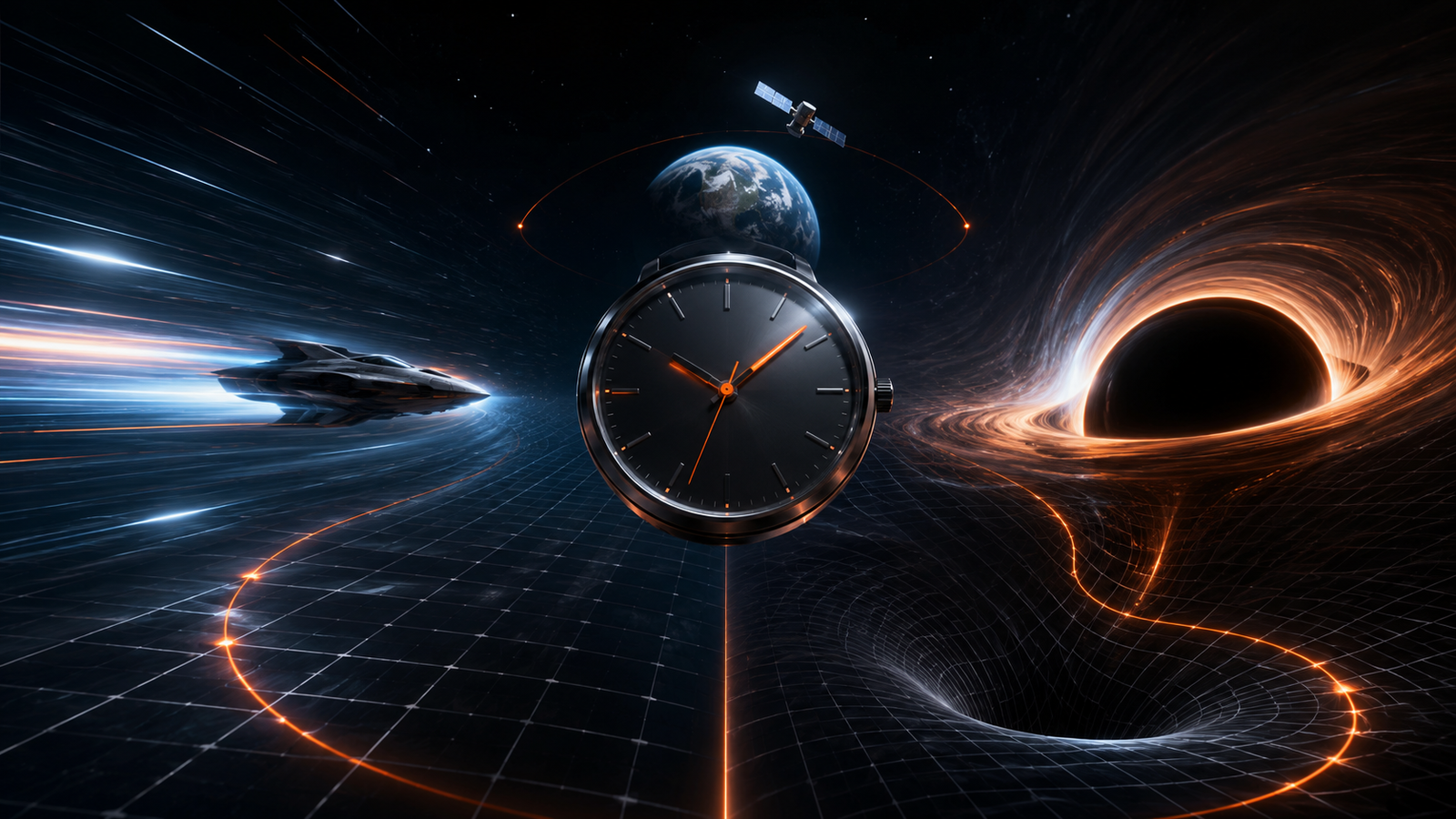
Sync two perfect clocks. Leave one on Earth. Send the other on a fast trip through space and bring it back.
Set them side by side again and they no longer agree.
Neither clock is broken. They recorded different amounts of time because they took different journeys through spacetime.
That is time dilation. Einstein’s relativity shows that time does not pass at the same rate for everyone. Motion changes how much time goes by. Gravity does too.
At everyday speeds the difference is far too small to feel. But it has been measured with atomic clocks, seen in fast moving particles, and built directly into the satellites over your head right now. Get close to the speed of light, or close to a black hole, and the effect stops being subtle.
Time dilation is not an illusion caused by watching from far away. It is a real difference in how much time passes, and it shows up the moment two clocks meet again.
What Is Time Dilation?
Time dilation is a difference in the amount of time measured by observers who move differently, or who sit in different gravitational conditions.
There are two flavors:
Velocity time dilation, caused by relative motion and described by special relativity.
Gravitational time dilation, caused by gravity and described by general relativity.
Dilation just means stretching. From one observer’s point of view, the gap between the ticks of a moving clock gets stretched out, so that clock appears to run slower.
That does not mean the moving person feels slowed down. Inside a fast spacecraft, one second still feels like one second. The traveler’s heart, thoughts, and onboard clocks all keep running normally. The difference only shows up when clocks that took different routes through spacetime are finally compared side by side. Physicists call the time recorded by the clock traveling with you your proper time.
Why Does Speed Slow Time?
Special relativity rests on one strange, stubborn fact: every observer moving at a steady speed measures the same speed of light in a vacuum, no matter what.
Ordinary objects don’t behave that way. Throw a ball forward from a moving car, and someone standing on the sidewalk measures the ball’s speed as the throw’s speed plus the car’s speed.
Light refuses to play by that rule. Whether the source is racing toward you or away from you, you still measure light moving at exactly the same speed: 299,792,458 metres per second in a vacuum.
A simple thought experiment called a light clock shows why this leads straight to time dilation.
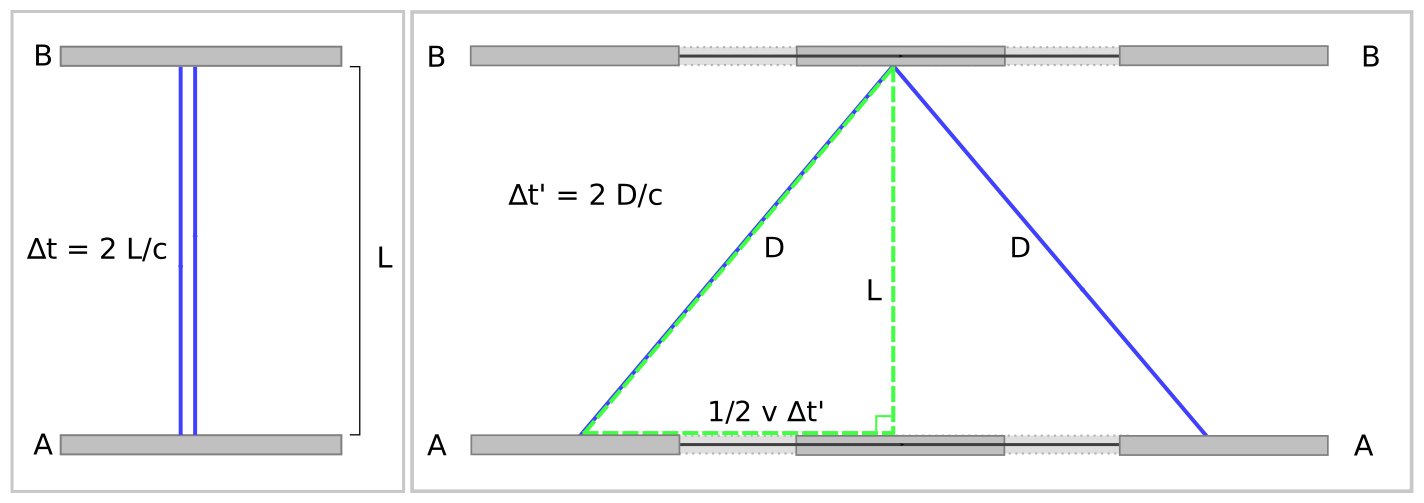
Picture two mirrors facing each other inside a spacecraft, with a pulse of light bouncing between them. Each round trip counts as one tick.
To a passenger on board, the light travels straight up and down. To someone watching the spacecraft fly past, the mirrors shift sideways while the light is in flight, so from their view the light traces a longer, diagonal path.
Both observers have to measure the same speed of light. If the outside observer sees the light cover more distance, each tick has to take more time from their point of view. The moving light clock runs slower, according to them.
Nothing is wrong with the clock. Every physical process runs on the same local time: atomic transitions, particle decay, biological aging, all of it. NIST has directly measured this motion related slowdown using precision atomic clocks.
The Time Dilation Formula
You don’t need the math to grasp the idea, but the formula shows how fast the effect grows as you approach light speed.
γ = 1 / √(1 − v²/c²)
Here v is the relative speed, c is the speed of light, and γ (gamma) is the Lorentz factor, the number that tells you how large the time dilation effect is.
The two measured time intervals relate like this:
Δt = γΔτ
Δτ is the time recorded on the traveler’s own clock. Δt is the longer interval measured in the frame where the traveler is the one moving.
Here is how fast that gap grows:
- At 10 percent of light speed, gamma is about 1.005, so one traveler year corresponds to roughly 1.005 years outside.
- At 50 percent of light speed, gamma is about 1.155, so one traveler year corresponds to roughly 1.155 years outside.
- At 80 percent of light speed, gamma is about 1.667, so one traveler year corresponds to roughly 1.667 years outside.
- At 90 percent of light speed, gamma is about 2.294, so one traveler year corresponds to roughly 2.294 years outside.
- At 99 percent of light speed, gamma is about 7.089, so one traveler year corresponds to just over seven years outside.
At 99 percent of light speed, one year for the traveler stretches into a little over seven years for everyone they left behind. And no object with mass can ever actually reach light speed. The closer you get, the more energy it costs, and the price keeps climbing without limit.
If Motion Is Relative, Whose Clock Is Actually Slower?
Say two spacecraft pass each other at a steady speed. Each crew can honestly call itself stationary and describe the other ship as the one moving. So each crew measures the other one’s clock as running slow. Both are right, from where they’re sitting.
That is not a contradiction. It works out because the two crews also disagree about which distant events happen at the same time.
Things get clearer once the observers actually meet up again.
In the classic twin paradox, one twin stays on Earth while the other takes a high speed round trip. The traveling twin has to turn around and come back, so the two of them do not take equivalent paths through spacetime.
When they reunite, the traveling twin has aged less and is younger. Their clocks disagree because their journeys were different. Precision clock experiments have reproduced this same effect, from both motion and gravity, at ordinary laboratory scales.
What Is Gravitational Time Dilation?
Motion is only half the story.
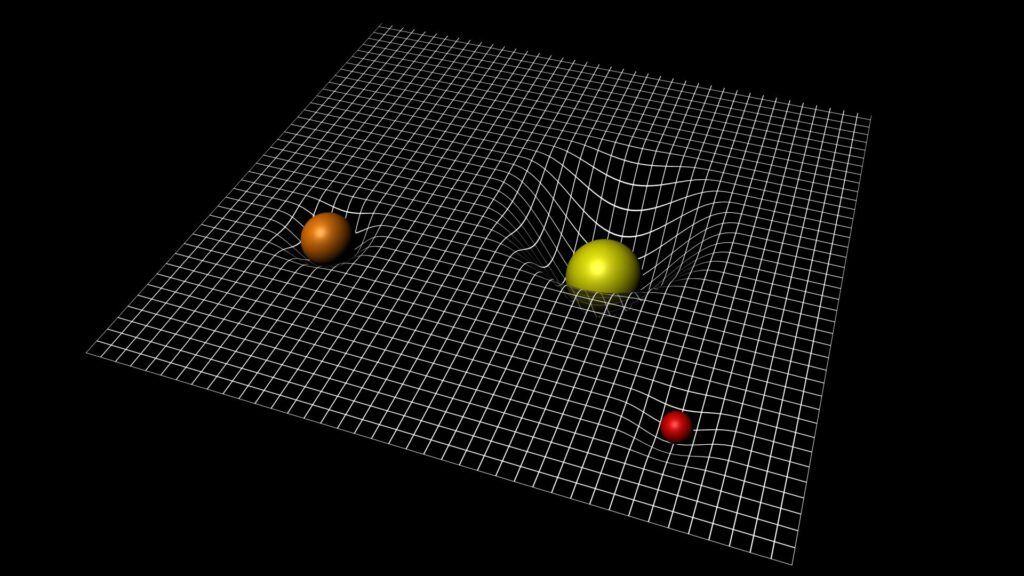
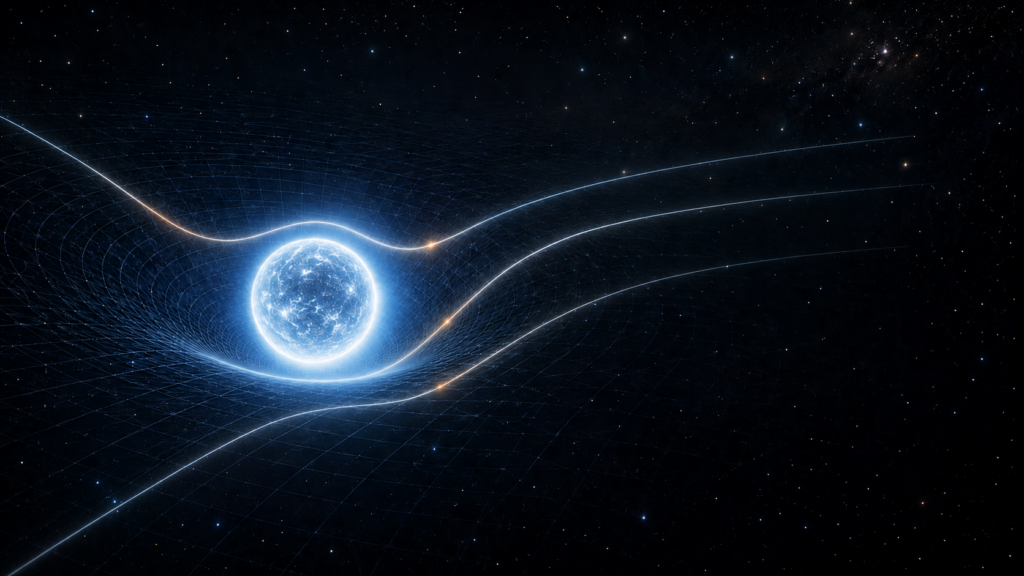
General relativity describes gravity as the curving of spacetime by mass and energy. One consequence: clocks at different heights inside a gravitational field do not tick at the same rate.
A clock closer to Earth ticks a little more slowly than a clock higher up. Put one perfect clock at sea level and another on a mountaintop, and the mountain clock will pull slightly ahead, because gravity is a touch weaker up there.
Nobody notices anything strange locally. Each person’s own clock feels completely ordinary. The gap only appears once the two clocks are compared directly.
Modern atomic clocks can catch this effect over startlingly short distances. NIST researchers measured gravitational time dilation between two clocks separated by just 33 centimetres in height.
A later experiment went further still, detecting the gravitational redshift across a single millimetre scale sample of atoms. The clocks were sensitive enough to catch gravity changing the flow of time across the height of the experiment itself.
Is Time Dilation Actually Real?
Yes. It has been confirmed with several completely different kinds of clocks: unstable particles, atomic clocks, and navigation satellites.
Fast moving particles live longer
Muons are unstable particles with a very short average lifetime.
Push a muon close to the speed of light and it survives, in the lab’s measurement, for far longer than a muon at rest. From the lab’s point of view, the muon’s internal clock is simply running slow.
In a major CERN muon storage ring experiment, muons moving with a Lorentz factor of about 29 survived roughly 29 times longer than their normal lifetime, exactly as special relativity predicts. A decaying particle isn’t built from gears or circuitry, and it still keeps the same kind of time.
Atomic clocks measure the difference directly
Atomic clocks run on extremely regular frequencies tied to transitions inside atoms.
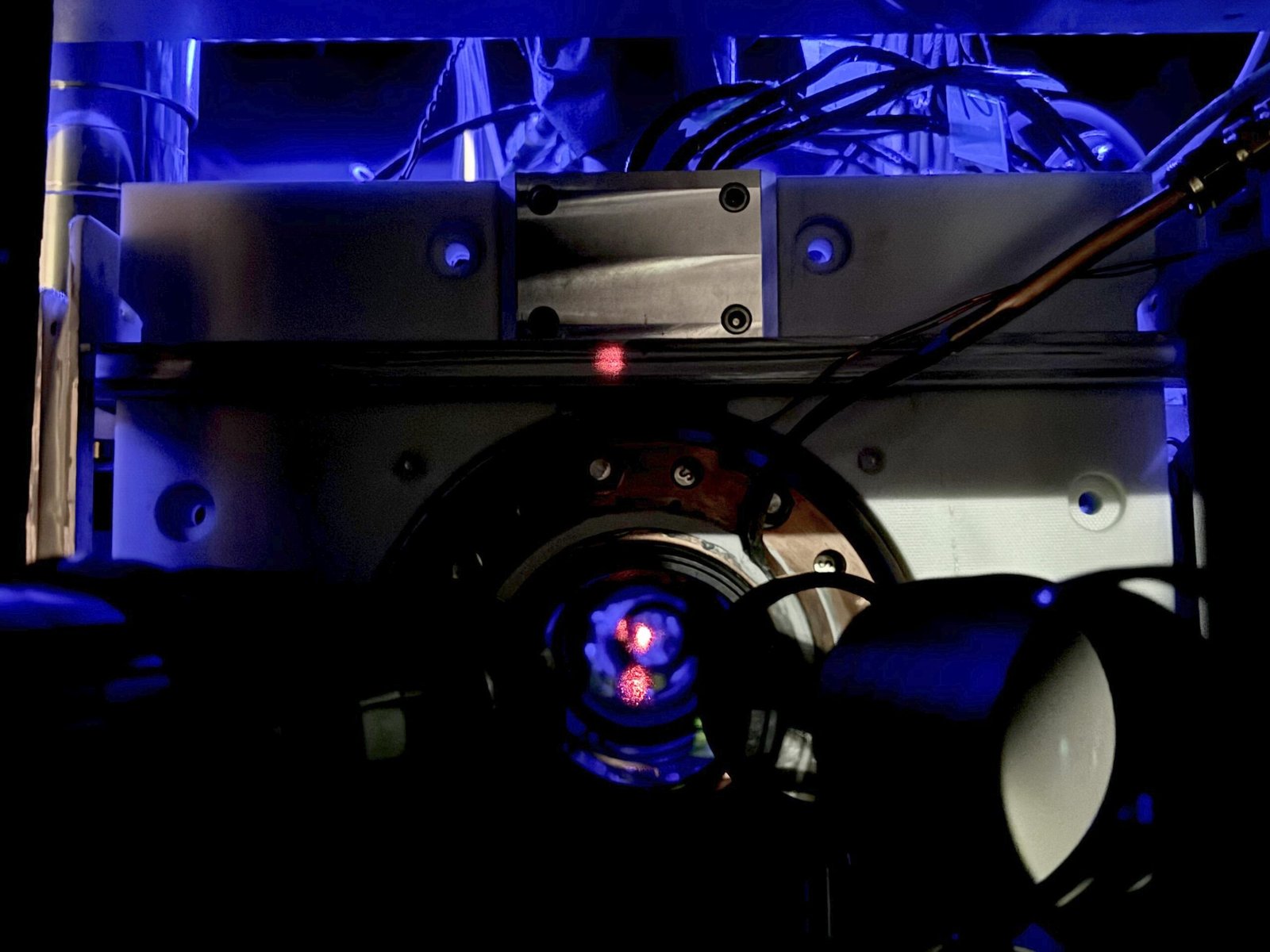
Researchers have compared clocks at different heights and different speeds. Today’s optical clocks are sensitive enough to catch gravity bending the flow of time across mere centimetres, even millimetres.
These experiments also rule out a simpler explanation. Time dilation is not just a delay in receiving a signal. Separated clocks, brought back together and compared directly, can hold genuinely different readings.
GPS depends on relativity to function
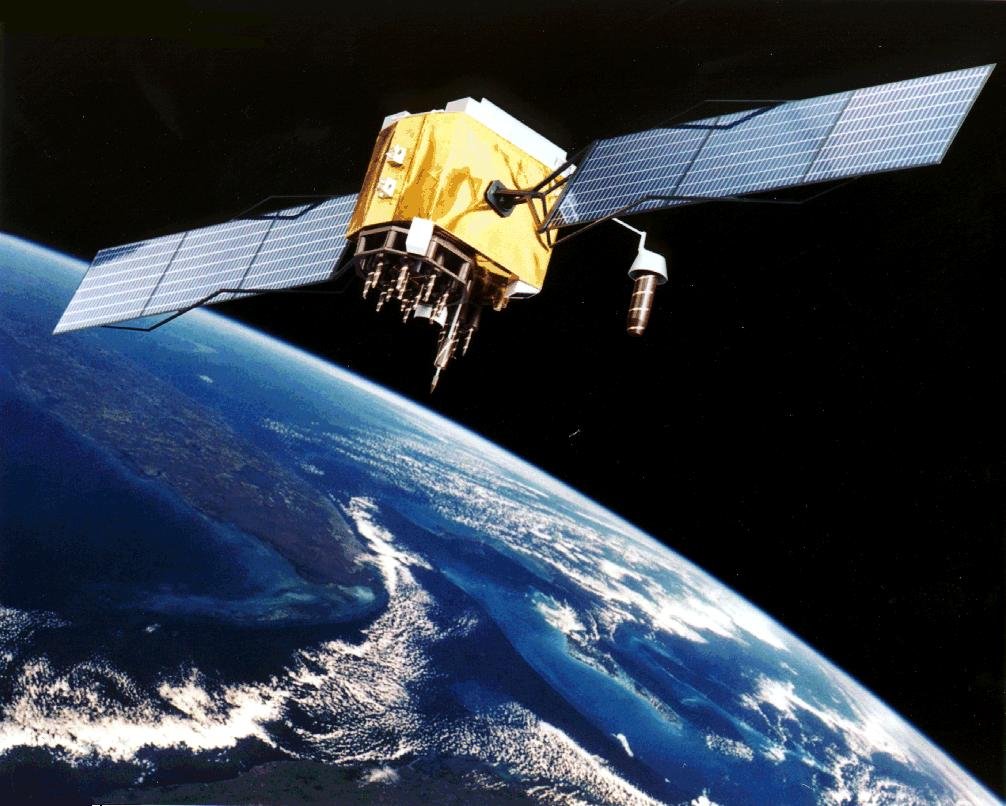
GPS calculates your location from the travel time of radio signals sent by satellites carrying onboard atomic clocks.
Those satellites move fast, so special relativity makes their clocks run slower relative to clocks on the ground. They also sit where gravity is weaker, so general relativity makes their clocks run faster. For GPS satellites, the gravity effect wins out. The combined difference comes to about 38 microseconds a day, with the satellite clocks running fast overall.
That sounds tiny, until you remember light covers more than 11 kilometres in 38 microseconds. Relativistic corrections are built directly into GPS. Skip them, and positioning errors would pile up fast.
A detailed scientific review of relativity in the Global Positioning System spells out just how large these gravitational and motion related clock shifts really are, large enough that GPS would simply stop working correctly if engineers ignored them.
Relativity isn’t just something GPS happens to demonstrate. It is part of the engineering that makes GPS work at all.
Do Astronauts Age More Slowly in Space?
Yes, though with today’s spacecraft the difference is tiny.
Astronauts on the International Space Station travel at about eight kilometres per second. Their speed makes their onboard clocks run slower, while the station’s weaker gravity makes them run slightly faster. NASA notes the station completes a full orbit roughly every 90 minutes.
In low Earth orbit, the speed effect wins out over the gravity effect. So astronauts come home a few milliseconds younger than they would have been had they simply stayed on Earth for the same stretch of time.
They notice nothing unusual while they’re up there. The gap only shows up once their elapsed time is compared against clocks back home.
Time Dilation Near a Black Hole
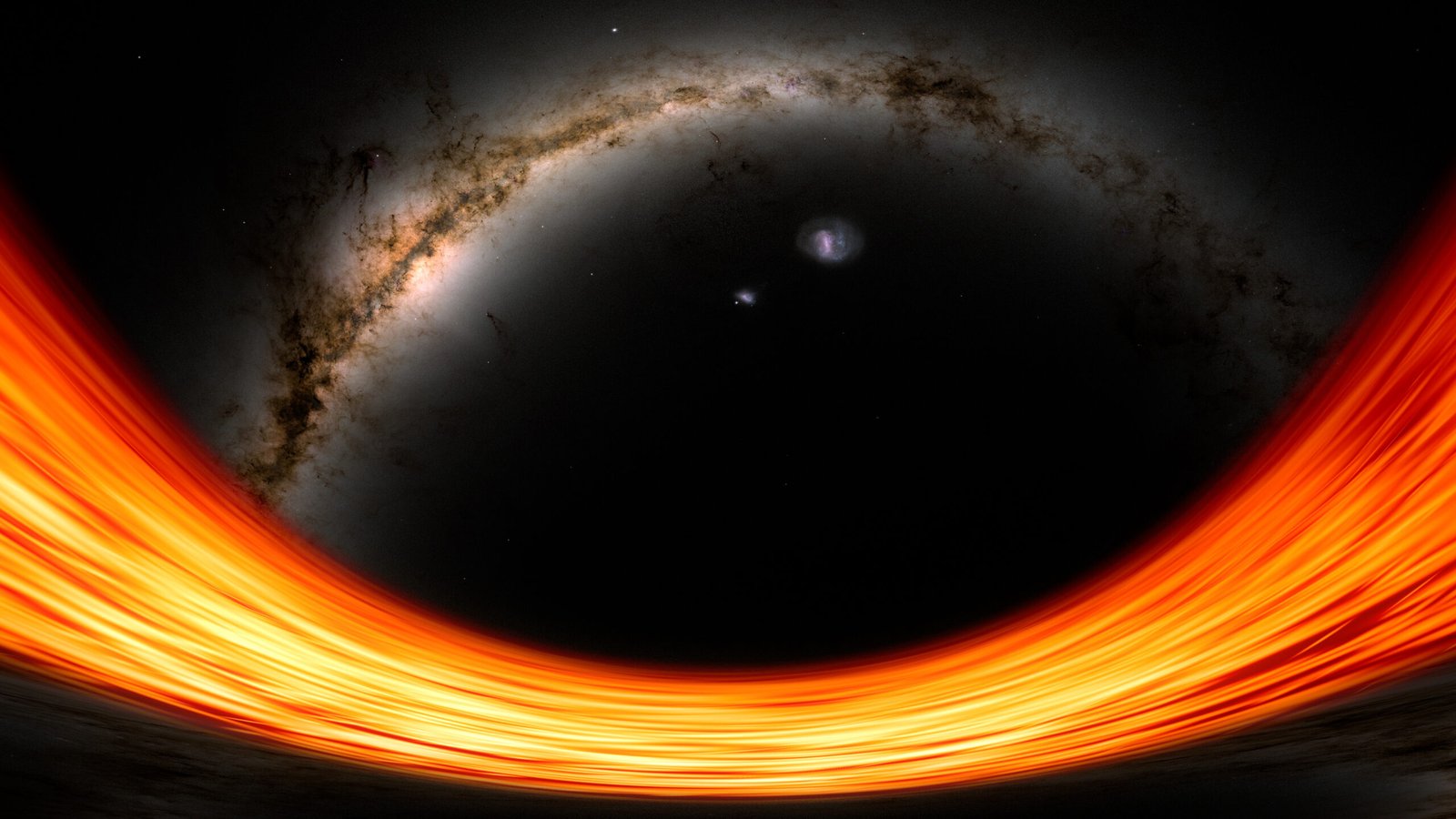
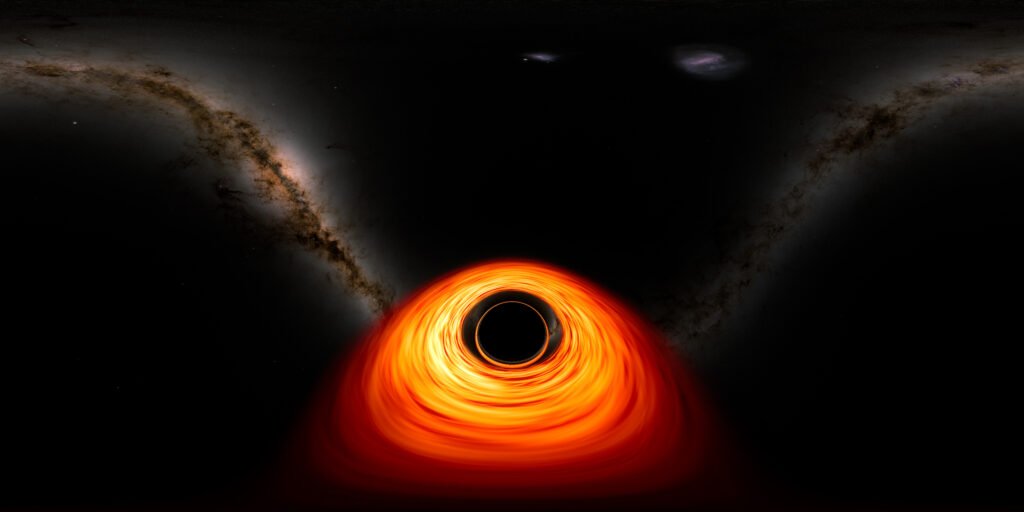
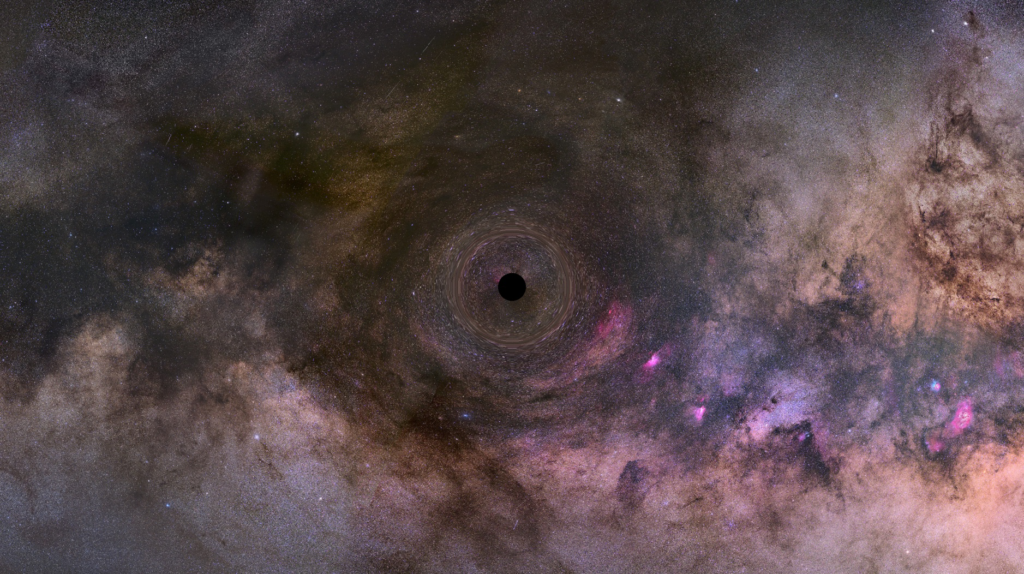
Black holes create some of the strongest gravitational fields in the universe, so gravitational time dilation gets extreme close to them.
To someone watching from far away, a clock held near the event horizon appears to tick slower and slower.
The event horizon is the boundary beyond which nothing, not even light, can escape. It is not a solid surface. NASA describes it simply as the boundary surrounding a black hole’s concentrated matter.
Someone falling toward a large enough black hole would not watch their own clock stop. Their own local time keeps ticking normally, and by their own clock, they cross the event horizon in a finite amount of time.
A distant observer sees something very different. Light from the falling person arrives more and more delayed and redshifted, so from far away that person appears to slow down, dim, and fade near the horizon.
Was the Time Dilation in Interstellar Actually Possible?
In Interstellar, one hour on Miller’s planet equals seven years back where Cooper’s crew is waiting near the black hole Gargantua.
The basic idea is allowed by general relativity. The conditions required for it are not gentle.
The planet would need to orbit extraordinarily close to the event horizon of a rapidly spinning black hole. The spin matters because it allows stable, or nearly stable, orbits much closer to the horizon than a non spinning black hole would ever permit.
A theoretical analysis of the film’s physics found that reaching that kind of time dilation ratio really does demand a rapidly rotating black hole with an orbit sitting extremely close to its horizon.
Even granting that the orbit could work mathematically, actually living there is another question. Radiation from the surrounding universe could arrive intensely blueshifted and concentrated. Tidal forces, orbital stability, and the black hole’s wider environment would all complicate things further.
Research looking at habitability near a supermassive black hole concluded that concentrated, high energy radiation would likely cause serious problems for a planet like Miller’s.
So the film’s time dilation is not pure fantasy. It just depends on an extremely finely tuned, and probably hostile, setup.
Can Time Dilation Be Used for Time Travel?
Time dilation genuinely does offer a one way route into the future.
Send a traveler on a near light speed round trip. Five years pass on their clock while fifty years pass on Earth. The traveler feels every one of those seconds normally, and comes home to an Earth that has aged decades further into the future than they have.
It offers nothing toward the past. Ordinary time dilation only changes how much time different observers accumulate. It never lets anyone arrive before they left.
The real obstacle is engineering, not physics. Near light speed travel would demand extraordinary amounts of energy, plus protection from radiation and high speed impacts with interstellar dust and gas.
Common Misconceptions About Time Dilation
It only looks like the clock is slow. The travel time of light signals does affect what an observer sees, but physicists calculate that delay and subtract it out. What’s left over is real time dilation, and reunited clocks can genuinely show different elapsed times.
Only clocks slow down. A clock is just something that measures physical change. Particle decay, chemical reactions, biological aging, all of it runs on the same local time.
Someone near a black hole feels time stopping. No. Your own clock always ticks normally from where you’re sitting. Time dilation only shows up when observers who took different paths compare their measurements afterward.
Time stops at the speed of light. Objects with mass can never reach light speed in the first place. Light itself follows paths with a zero proper time interval, but relativity gives no valid rest frame for a photon, so claims about what light personally experiences don’t really hold up.
Key Takeaways
- Speed affects time. A moving clock is measured to tick more slowly than a clock at rest with the observer.
- Gravity affects time. A clock deeper in a gravitational field ticks more slowly than one farther out.
- You never feel your own time slowing down. Your watch, your heartbeat, your thoughts all feel completely normal to you.
- The effect is physical. Clocks that separate and later reunite can show genuinely different elapsed times.
- GPS depends on it. Satellite navigation needs relativistic corrections to work at all.
Frequently Asked Questions
What is time dilation in simple terms?
It means two clocks can record different amounts of elapsed time because they moved differently, or experienced different amounts of gravity.
Why does time slow down at high speed?
Because every steadily moving observer measures the same speed of light, their measurements of space and time have to adjust as speed increases. One result of that adjustment is a moving clock ticking slower, as measured from outside.
Does gravity really slow time?
Yes. A clock deeper in a gravitational field ticks more slowly than one farther out. Atomic clocks have caught the effect across distances as small as about a millimetre.
At what speed does time dilation become noticeable?
It exists at every speed, but it only becomes significant once you’re moving at a large fraction of light speed. At 90 percent of light speed, an outside observer measures more than twice as much time as the traveler experiences.
Does time dilation affect aging?
Yes. Aging is a physical process, so a near light speed traveler genuinely ages less between departure and reunion than the people who stayed behind on Earth.
Can time dilation send us into the future?
Yes, in principle. A fast enough traveler experiences less time and comes home to find far more years have passed on Earth. It offers no way back into the past.
Conclusion
Time dilation reveals something time itself was never supposed to do: it does not tick identically for everyone, everywhere, all at once.
Speed changes how much time passes between two events. Gravity changes it too. Nobody ever feels their own time slowing down, because every local process, from your heartbeat to your watch, follows the same clock you’re standing next to.
The effect stays almost invisible in daily life. It becomes measurable on Earth, obvious in fast moving particles, and essential to the GPS in your pocket. Get close to the speed of light, or close to a black hole, and the gap stretches from fractions of a second into years.
Einstein didn’t just prove that clocks can disagree. He showed that how much time actually passes for you depends on the journey you take through spacetime itself.
References
- National Institute of Standards and Technology. NIST pair of aluminum atomic clocks reveal Einstein’s relativity at a personal scale. News release, September 2010. Government research institute. nist.gov (accessed July 2026).
- Bothwell, T., Kennedy, C.J., Aeppli, A., Kedar, D., Robinson, J.M., Oelker, E., Staron, A., Ye, J. Resolving the gravitational redshift across a millimetre-scale atomic sample. Nature 602, 420 to 424, 2022. Peer reviewed paper. DOI: 10.1038/s41586-021-04349-7 (accessed July 2026).
- Bailey, J. et al. Measurements of relativistic time dilatation for positive and negative muons in a circular orbit. Nature 268, 301 to 305, 1977. Peer reviewed paper. DOI: 10.1038/268301a0 (accessed July 2026).
- Ashby, N. Relativity in the Global Positioning System. Living Reviews in Relativity 6, 1, 2003. Peer reviewed review article. DOI: 10.12942/lrr-2003-1 (accessed July 2026).
- NASA. International Space Station facts and figures. Government agency page. nasa.gov (accessed July 2026).
- NASA Science. Black holes. Government agency page. science.nasa.gov (accessed July 2026).
- Schnittman, J.D. Life on Miller’s planet: the habitable zone around supermassive black holes. arXiv:1910.00940, 2019. Preprint. arxiv.org/abs/1910.00940 (accessed July 2026).
- James, O., von Tunzelmann, E., Franklin, P., Thorne, K.S. Gravitational lensing by spinning black holes in astrophysics, and in the movie Interstellar. Classical and Quantum Gravity 32, 065001, 2015. Peer reviewed paper. DOI: 10.1088/0264-9381/32/6/065001 (accessed July 2026).
Join the discussion
Comments are moderated and may take a little while to appear.