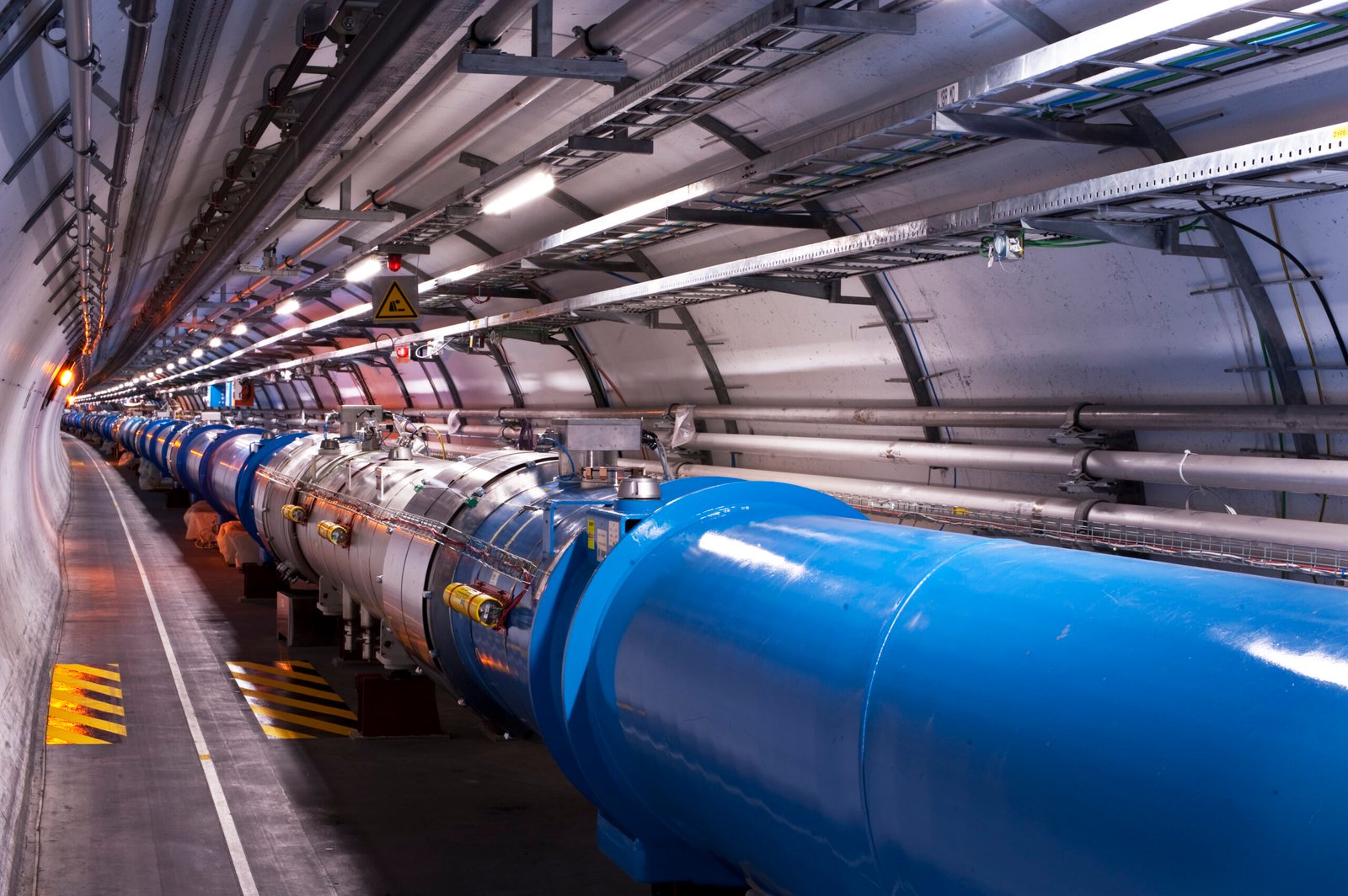
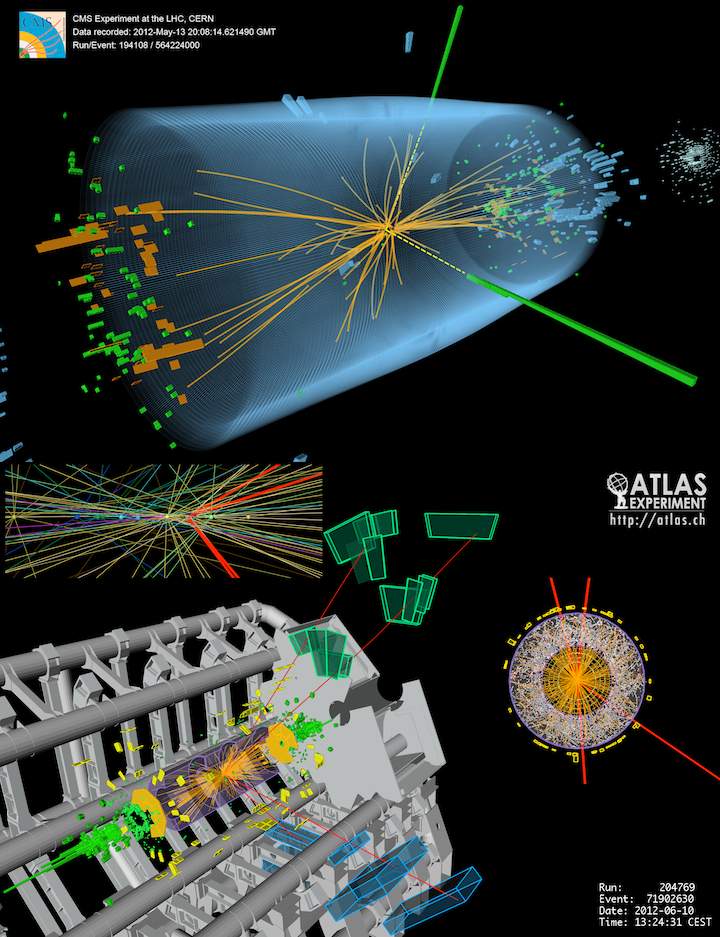
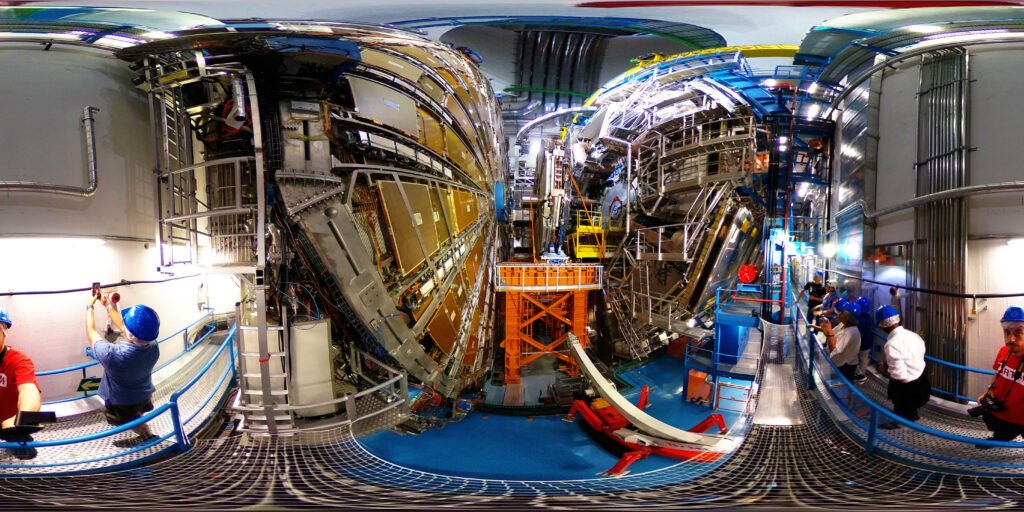
On July 4, 2012, physicists at CERN’s Large Hadron Collider announced they had found the Higgs boson, closing a search that had run for nearly fifty years. The discovery confirmed that a field fills all of space, one that gives mass to the fundamental particles making up every atom in existence.
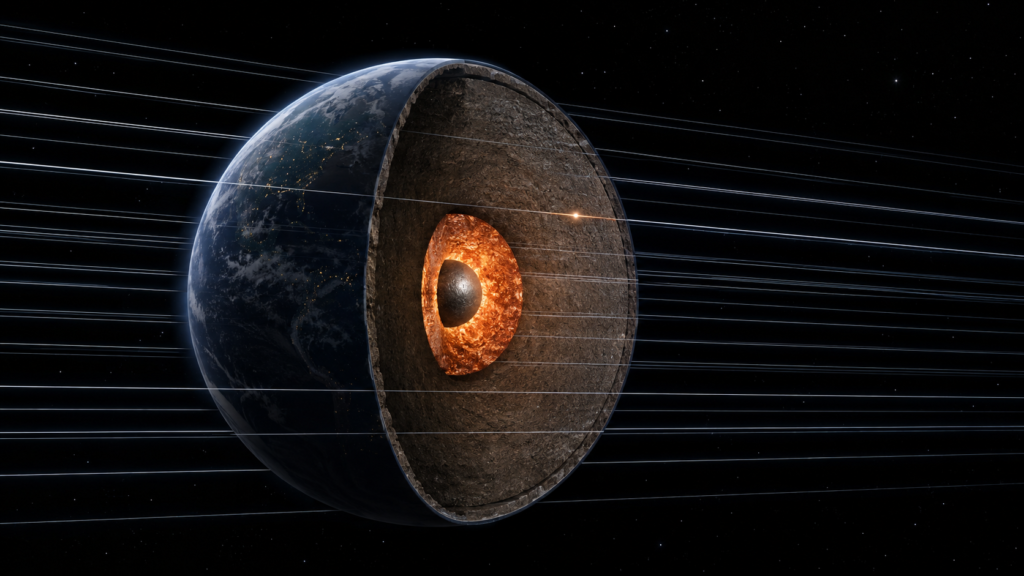
What if the Higgs field switched off? For a fraction of a second, nothing would look different. Then every electron in every atom in your body would stop behaving like an electron at all. It would become massless, shoot outward at the speed of light, and stop orbiting anything. Atoms, the basic unit of ordinary matter, would lose the one property that lets them hold together. This is not speculation for its own sake. It follows directly from the Standard Model of particle physics, the same theory confirmed when the ATLAS and CMS experiments at CERN’s Large Hadron Collider announced the discovery of the Higgs boson.
What the Higgs Field Actually Does
Any attempt to answer what if the Higgs field switched off has to start with what the field actually does. The Higgs field is not a substance particles push through, despite the popular molasses and crowded room analogies. As Quanta Magazine explains, the more accurate picture involves vibration. Every fundamental particle is a ripple in its own field, and the Higgs field acts on those other fields the way a stiffer string changes the pitch a guitar string can vibrate at. A stronger interaction with the Higgs field raises a particle’s resonant frequency, and in quantum field theory, a higher resonant frequency for a particle at rest means a greater mass.
This mechanism, formally called the Brout-Englert-Higgs mechanism, was developed independently by Robert Brout and François Englert in Belgium and by Peter Higgs in the United Kingdom in 1964. CERN describes it as the explanation for why fundamental particles like electrons and quarks have mass at all, while particles such as the photon, which do not interact with the Higgs field, remain massless. The Higgs boson itself is simply the particle you get by exciting the field, the same way a photon is an excitation of the electromagnetic field.
Why Electrons Need Mass to Build an Atom
Ask what if the Higgs field switched off and the clearest, most immediate casualty is the electron. According to CERN’s CMS experiment, the radius of an electron’s orbit in a simple hydrogen atom is inversely proportional to the electron’s mass. Take the mass away and the radius effectively becomes infinite, meaning the electron can never settle into a bound orbit around a proton at all.
A massless particle can only travel at the speed of light, with no way to slow down or curve into a stable path.
Without electron mass, there is no mechanism left to hold an electron near a nucleus, so no atoms, no molecules, and no chemistry of any kind could form. This same electron behavior, but under the ordinary conditions of our universe where the Higgs field is switched firmly on, is what Astrinova’s earlier piece on why electrons don’t fall into the nucleus explores from the opposite angle: quantum mechanics keeps a massive electron from spiraling inward, but it is the Higgs field that gives the electron the mass needed to have a stable orbit to keep in the first place.
What Would Happen to Protons, Neutrons, and Ordinary Matter
Here is where the answer to what if the Higgs field switched off gets more forgiving than most popular explanations suggest. Quarks, the particles that make up protons and neutrons, do get their individual mass from the Higgs field, but that mass is a small part of the total. According to CERN’s own factsheet on the Higgs boson, quarks account for only a tiny part of a proton’s mass, with most of it coming from the strong nuclear force that binds the quarks together rather than from the Higgs mechanism.
That does not mean nuclear matter would be untouched. Losing the Higgs field would still strip quarks of their individual masses and alter the fine balance of the strong force, so protons and neutrons would not behave exactly as they do now. But the survival of some form of nuclear matter is far more plausible than the survival of atoms, since electrons depend on the Higgs field directly and almost completely, while protons and neutrons depend on it only partially.
What If the Higgs Field Switched Off for the Weak Force
The Higgs mechanism’s original job, historically, was not giving mass to electrons and quarks at all. It was solving a puzzle about the weak nuclear force. The W and Z bosons that carry the weak force are unusually heavy, while the photon that carries electromagnetism is massless, and CERN’s explanation of the Brout-Englert-Higgs mechanism describes how the Higgs field resolves that asymmetry by giving the W and Z bosons their mass.
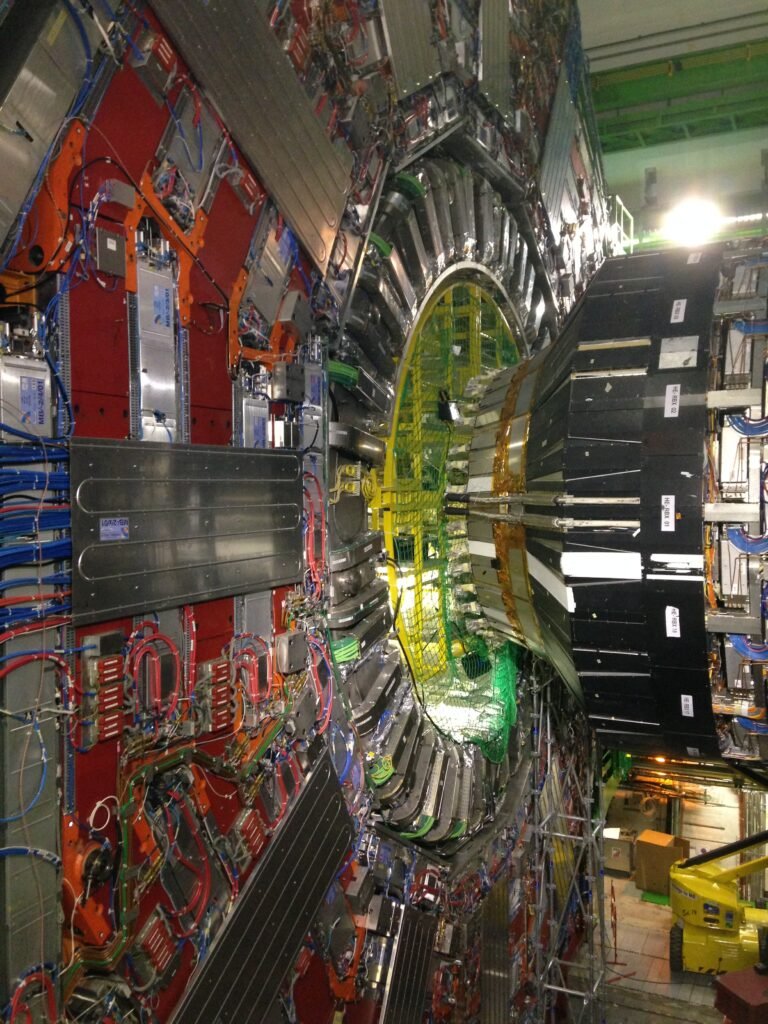
Switch the field off and the W and Z bosons would become massless too. A force whose carrier particles are massless can act over long distances, the way electromagnetism does. The weak force, instead of being confined to the interior of an atomic nucleus, would behave more like a second version of electromagnetism, reshaping radioactive decay, the fusion reactions that power stars, and the chemistry of the early universe.
The Neutrino Exception Nobody Has Solved
Neutrinos complicate any tidy answer to what if the Higgs field switched off, because physicists are not fully certain how neutrinos get their mass in the first place. Symmetry Magazine, published jointly by Fermilab and SLAC, explains that neutrinos are known to have a tiny mass, roughly a million times lighter than the electron, yet the standard version of the Higgs mechanism does not obviously apply to them the way it does to electrons and quarks.
“Left-handed particles behave very differently from right-handed particles,” Fermilab physicist Pedro Machado told Symmetry Magazine, describing why the ordinary Higgs mechanism struggles to explain neutrino mass. Leading alternative ideas, including the seesaw mechanism, propose an entirely separate, undiscovered source of mass at play. That means a Higgs switched off universe would leave neutrinos as one of the few particles whose fate genuinely cannot be predicted with confidence, a reminder that even this well tested corner of physics still has an open question at its center. Astrinova’s piece on why neutrinos are nearly impossible to catch looks at these same particles from a different unsolved angle, the fact that they interact with almost nothing at all.
Why This Matters
Asking what if the Higgs field switched off is not an idle exercise. It is a way of testing a genuinely confirmed theory to its logical edges. The Brout-Englert-Higgs mechanism sat as an unverified mathematical proposal for nearly fifty years before the 2012 discovery of the Higgs boson turned it into observed fact, work that earned François Englert and Peter Higgs the 2013 Nobel Prize in Physics, according to the Nobel committee’s own citation. Working through the consequences of switching the field off shows precisely how much of the ordinary, tangible world, from the size of atoms to the reach of the weak force, rests on a single field having settled into a nonzero value early in the universe’s history.
Key Takeaways
Here is what changes if what if the Higgs field switched off stopped being a thought experiment:
- The Higgs field gives mass to fundamental particles like electrons and quarks through their interaction with it, not by particles pushing through a substance.
- Without the Higgs field, electrons would be massless and unable to orbit a nucleus, meaning atoms, molecules, and chemistry could not exist.
- Protons and neutrons would likely survive in some altered form, since most of their mass comes from the strong nuclear force rather than the Higgs field.
- The W and Z bosons that carry the weak force would also lose their mass, letting the weak force act over long distances like electromagnetism.
- Neutrino mass remains an open scientific question, and it is not yet settled whether neutrinos rely on the Higgs mechanism at all.
FAQs
What does the Higgs field actually do?
It gives mass to certain fundamental particles, including electrons, quarks, and the W and Z bosons, through their interaction with the field. Particles that do not interact with it, such as the photon, stay massless.
Would atoms still exist if the Higgs field switched off?
No. Electrons would become massless and travel at the speed of light, unable to settle into a bound orbit around a nucleus, so atoms could not form.
Would protons and neutrons disappear too?
Not entirely. Most of their mass comes from the strong nuclear force rather than the Higgs field, so some altered form of nuclear matter would likely persist, even though quarks themselves would lose their individual masses.
Do neutrinos get their mass from the Higgs field?
It is not certain. The ordinary Higgs mechanism does not clearly apply to neutrinos, and physicists still debate alternative explanations such as the seesaw mechanism.
Is the Higgs field the same thing as the Higgs boson?
No. The Higgs field is the field that permeates space and gives particles mass. The Higgs boson is the particle produced when that field is excited, and its discovery in 2012 confirmed the field exists.
What if the Higgs field switched off only briefly, then came back?
Even a brief interruption would be destructive at the atomic scale. Electrons would fly outward the instant the field switched off, and nothing in the Standard Model guarantees that atoms would reassemble correctly once the field returned.
References
- CERN, CERN and the Higgs Boson: home.cern
- CMS Experiment (CERN), Why Would I Care About the Higgs Boson?: cms.cern
- CERN, CERN and the Higgs Boson (factsheet): home.cern
- Quanta Magazine, How the Higgs Field (Actually) Gives Mass to Elementary Particles: quantamagazine.org
- Symmetry Magazine, How Do Neutrinos Get Their Mass?: symmetrymagazine.org
- The Nobel Prize in Physics 2013, NobelPrize.org: nobelprize.org
- CERN, How Did We Discover the Higgs Boson?: home.cern
Join the discussion
Comments are moderated and may take a little while to appear.