
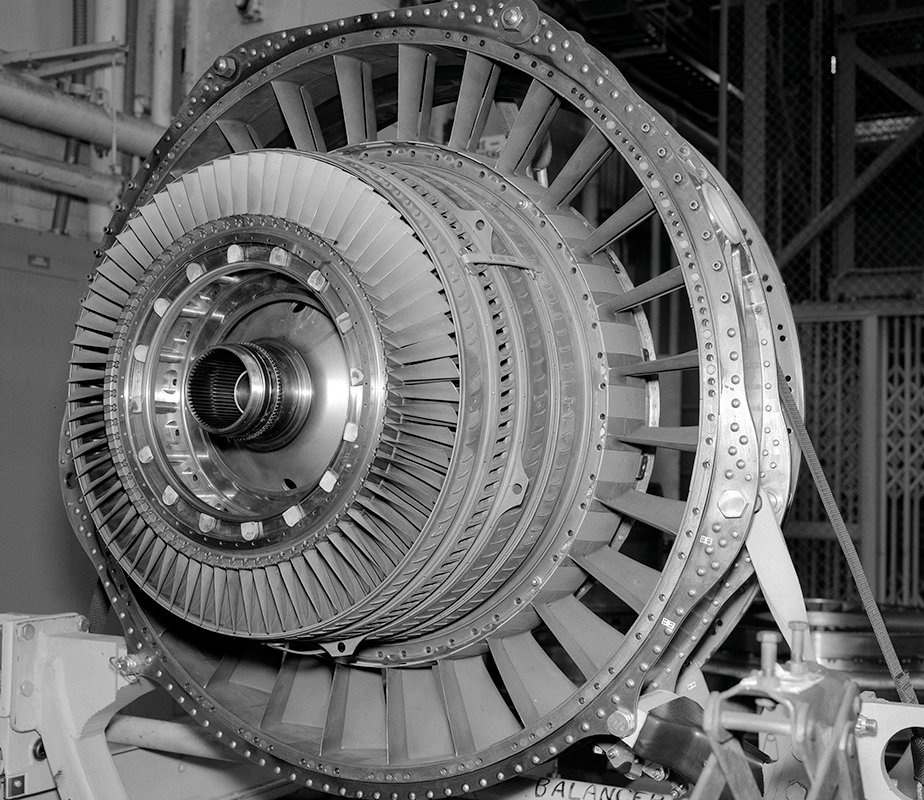
A jet engine is a machine that turns fuel into forward thrust by accelerating a stream of air out the back faster than it came in the front. There are several distinct types of jet engines in use today, each built around that same idea but suited to a different flight regime. That single principle covers everything from the engine on a regional airliner to the exotic hardware NASA has flown at nine times the speed of sound. Strictly speaking, propulsion engineers reserve the term jet engine for designs that produce thrust mainly through a fast exhaust jet, which is why turboprops and turboshafts are usually classified as gas turbine engines rather than jet engines in the narrow sense: most of their useful output is shaft power, not a jet of exhaust. This article uses the broader, commonly understood meaning of jet engine, since that is how the term is used in everyday aviation writing, but the distinction is worth knowing before going further.
What changes between designs is how the air gets compressed, how much of it goes through the hot core versus around it, and where the engine’s useful energy ultimately ends up: as high speed exhaust, as bypass airflow, or as power delivered through a shaft. Commercial aviation runs almost entirely on turbofans today. Modern fighter aircraft overwhelmingly use low bypass or medium bypass afterburning turbofans rather than pure turbojets, which now survive mainly in older aircraft, missiles, and target drones. Helicopters and many regional aircraft rely on turboshafts and turboprops, and a small number of experimental vehicles have flown on ramjets and scramjets built for speeds where a rotating compressor becomes impractical. This article walks through each type, what makes it different, and why an engineer would choose one over another for a given job.
What All Types of Jet Engines Have in Common
The turbojets, turbofans, turboprops, and turboshafts covered here all operate on the Brayton cycle, the thermodynamic loop that describes compression, combustion, and expansion. Air enters the inlet, gets compressed, has fuel added and burned, then expands through a turbine that extracts some of that energy to keep the compressor turning. In the ideal Brayton cycle, heat is added at constant pressure, though real combustors experience a measurable pressure drop as the fuel burns, which engineers account for in actual engine design. [1] In turbojets and turbofans, substantial energy remaining after the turbine contributes to thrust through the exhaust nozzle. Turboprops and turboshafts extract a much larger share through their turbine systems for delivery as shaft power. Ramjets and scramjets also follow a form of the Brayton cycle, but they accomplish compression through the vehicle’s forward motion and inlet geometry rather than through a mechanical compressor. Because there is no compressor to drive, they do not require a turbine.
The three core components, a compressor, a combustor, and a turbine, appear in every gas turbine engine, whether it is bolted to an airliner wing, a helicopter, or a stationary power plant. What actually separates a turbojet from a turbofan from a turboshaft is how that shared core is configured and where the engine sends its useful energy afterward: into a fast exhaust jet, into a large volume of bypass air, or into an output shaft driving a propeller or rotor.
Astrinova covers propulsion engineering more broadly in its Technology section.
The Turbojet: The Original Design
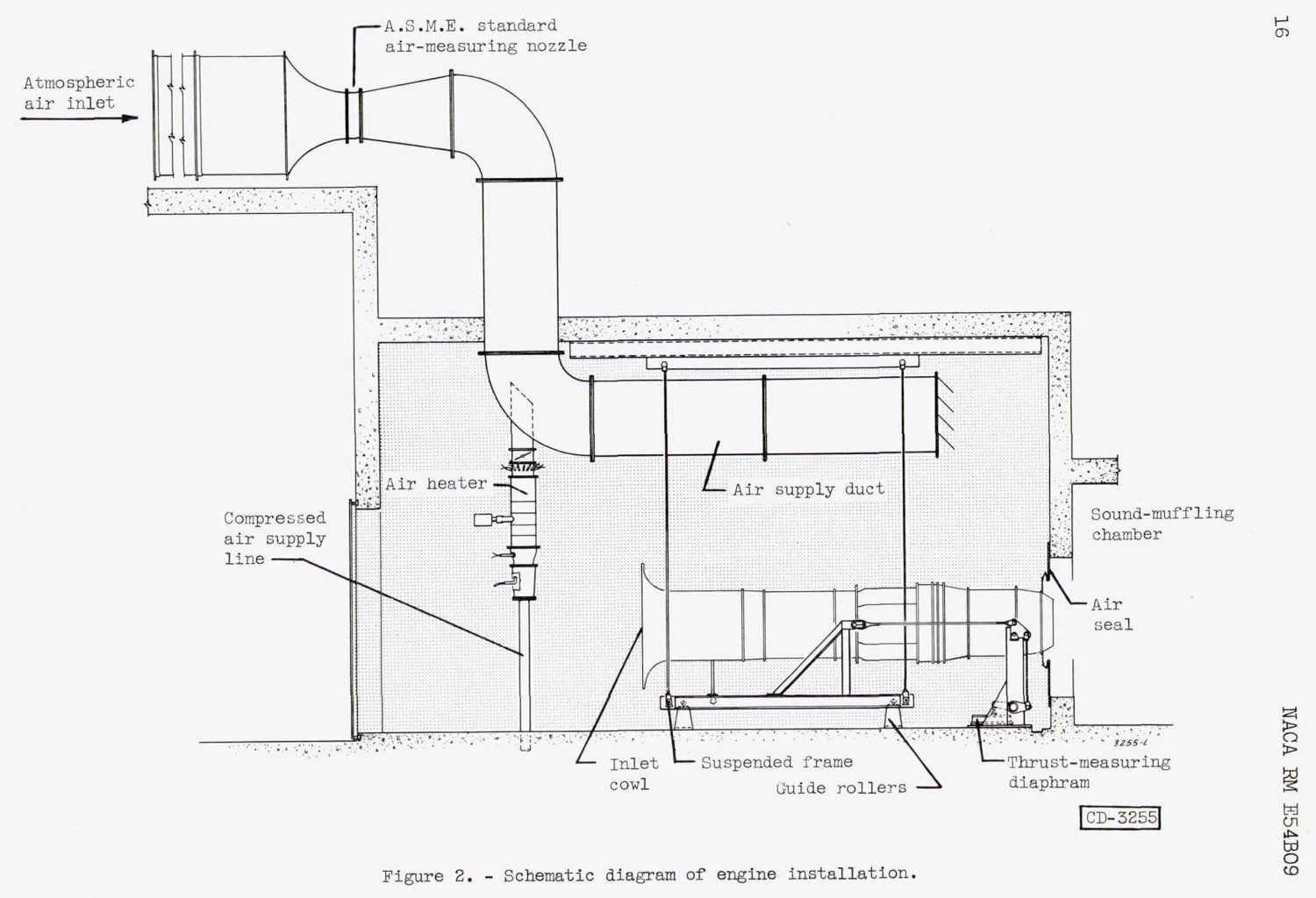
The turbojet is the simplest form of the gas turbine aircraft engine and the one that powered the first jet aircraft in the 1940s. All of the air that enters the inlet passes through the compressor, the combustor, and the turbine, then leaves through a single nozzle at high velocity. There is no bypass air routed around the core, so essentially every bit of intake air gets heated and accelerated.
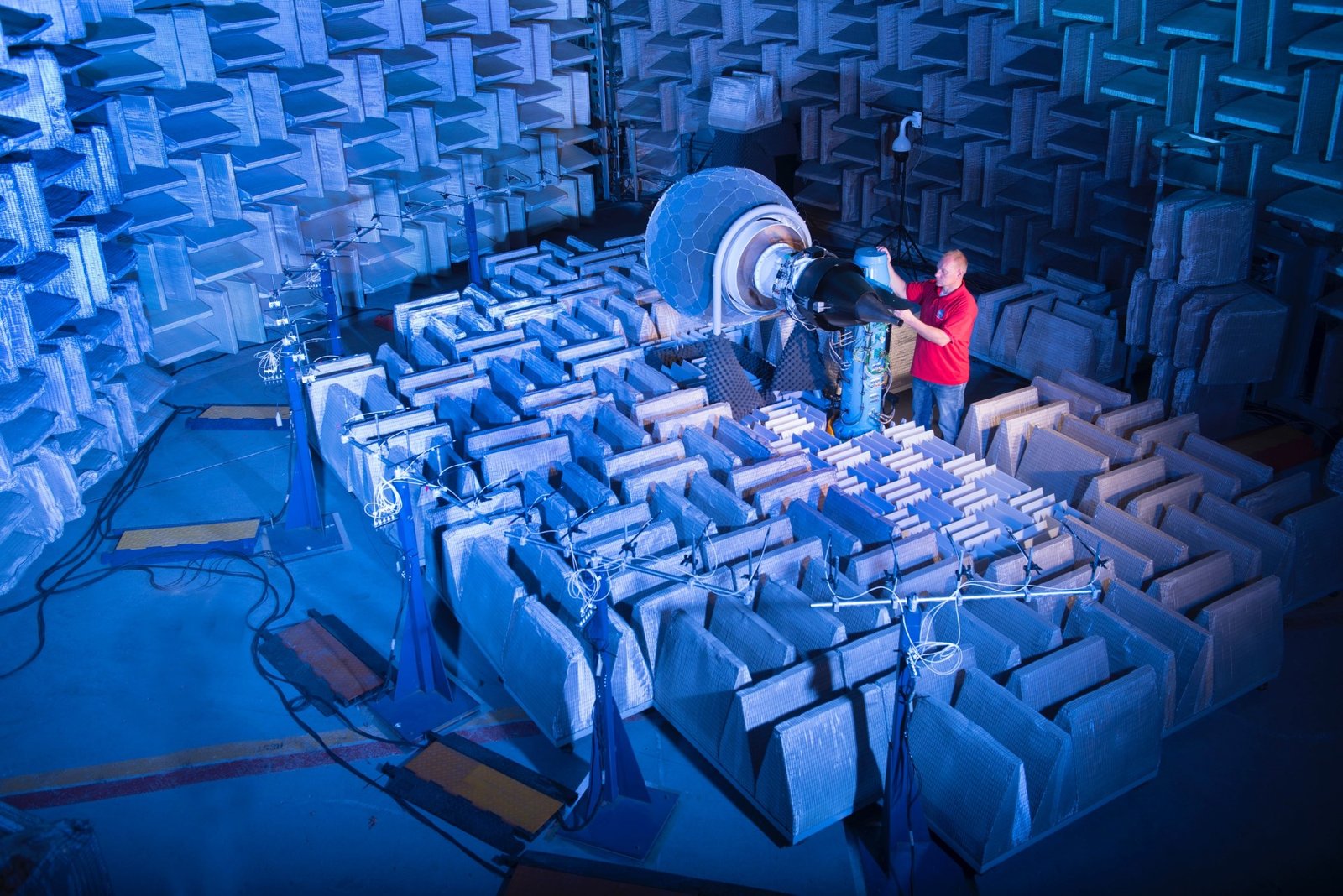
That design produces very high exhaust velocity, useful at high speed and high altitude, but it is inefficient at the lower speeds where most air travel actually happens, and it is loud, since a fast, small jet of exhaust generates more noise than a slower, larger one. For these reasons, pure turbojets have largely disappeared from both commercial and modern military service. They remain in use chiefly in older aircraft still flying, missiles, target drones, and a few specialized applications where simplicity and sustained high speed outweigh fuel economy.
The Turbofan: How Most Airliners Fly Today
The turbofan solves the turbojet’s efficiency problem by adding a large fan at the front of the engine. Some air passes through the core exactly as it would in a turbojet, while the remaining air is accelerated by the fan blades alone and routed around the outside of the core, bypassing combustion entirely. The ratio between that bypassed air and the air that actually goes through the core is called the bypass ratio, and it is one of the most important numbers in modern engine design. In high bypass turbofans, the bypass stream is far larger than the core stream. In low bypass turbofans, the split is much more even, with a substantially larger share still going through the core than in a high bypass design.
High bypass ratio engines, the kind found under the wings of a Boeing 787 or an Airbus A350, move a large volume of air at a comparatively gentle speed rather than a small volume at very high speed. That approach is more fuel efficient and considerably quieter, since propulsive efficiency drops off as jet velocity rises relative to flight speed. GE Aerospace’s GE9X, built for the Boeing 777X, illustrates how far this has gone: it has a fan diameter of 134 inches, close to the width of a Boeing 737 fuselage, an approximate bypass ratio of 10 to 1, and an overall pressure ratio of about 60 to 1, and GE states it delivers roughly 10 percent better fuel efficiency than its predecessor, the GE90. [2]
Low bypass turbofans sit further toward the turbojet end of the spectrum and remain the standard choice for supersonic fighters, which need the extra core thrust and the option of afterburning for short bursts of speed that a high bypass design cannot easily provide.
The Turboprop: Propeller Efficiency at Lower Speeds
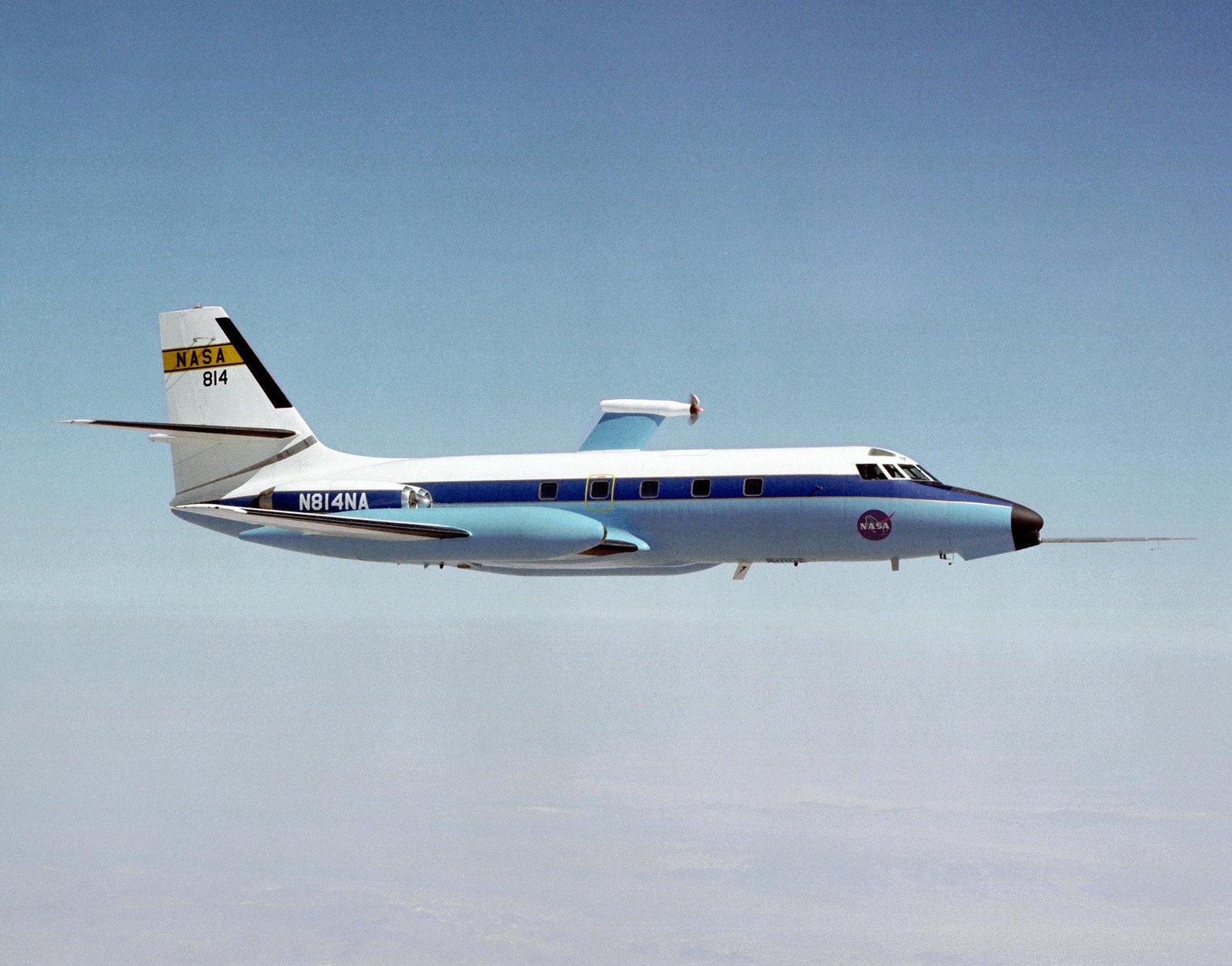
A turboprop uses its turbine system to extract most of the energy from the gas stream and transmit it through a reduction gearbox to a propeller. Many designs use a separate free power turbine that spins independently of the core, mechanically decoupled from the compressor shaft, while other turboprops use a fixed shaft arrangement instead. In most turboprops, the propeller produces the large majority of total thrust, while the residual exhaust jet contributes a smaller amount, the exact split varying by engine design.
That arrangement is highly efficient at the speeds and altitudes where regional and short haul aircraft typically operate, generally in the range of a few hundred miles per hour and moderate altitudes, though these are useful generalizations rather than fixed physical limits, and some turboprops fly comfortably above them. A propeller still works well aerodynamically in that range, and turboprops tend to perform strongly on shorter runways, since propellers generate good static thrust at low forward speed. That combination is part of why turboprops remain common on regional airliners, cargo aircraft, and military transports.
The tradeoff shows up as forward speed climbs into the transonic range, where propeller tips begin encountering compressibility effects and lose efficiency quickly, which is why turboprops generally cruise slower than turbofan airliners, though the fastest turboprop designs can approach the performance of some smaller jets.
The Turboshaft: Power Without a Propulsive Jet
A turboshaft engine is mechanically close to a turboprop, sharing a similar gas generator and turbine arrangement, but instead of driving a propeller through a gearbox, it delivers shaft power to something else entirely: a helicopter’s main and tail rotors, an auxiliary power unit, or in some designs, a ship or tank. The engine still has an exhaust outlet, and that exhaust still carries kinetic and thermal energy, but the engine is not designed primarily around generating propulsive jet thrust the way a turbojet or turbofan is. Shaft output is the point of the design.
Turboshafts are the preferred choice for most medium and large helicopters, thanks to a power to weight ratio that piston engines struggle to match, and that advantage let helicopter designers build larger, more capable aircraft, from medium utility helicopters to heavy lift military transports. Smaller and older helicopters still fly on piston engines, and electric and hybrid propulsion is an active area of development for light helicopters, so the turboshaft’s dominance is strongest at the medium to heavy end of the fleet rather than universal. The same gas turbine architecture, scaled differently, also shows up in tanks such as the M1 Abrams and in some fast patrol boats and corvettes, anywhere a light, powerful rotating shaft output matters more than a piston engine’s bulk.
The Ramjet: Compression Without Moving Parts
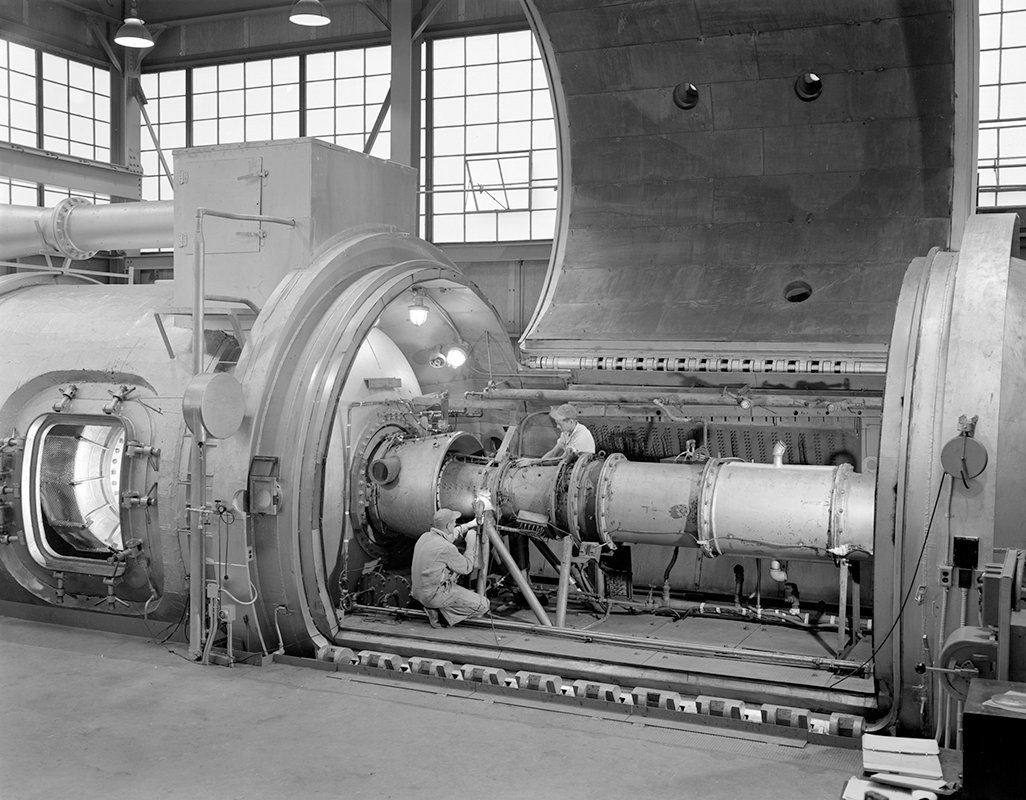
Turbojets, turbofans, turboprops, and turboshafts all rely on a mechanical compressor, a set of spinning blades, to raise the pressure of incoming air before combustion. A ramjet dispenses with that compressor entirely. Instead, it uses the vehicle’s own forward speed to compress the air through the shape of the inlet alone, a series of shock waves that slow the air down and convert that lost speed into higher pressure. Because there is no compressor to drive, a ramjet has no turbine either, only an inlet, a combustion chamber with a fuel injector and flame holder, and a nozzle. [3]
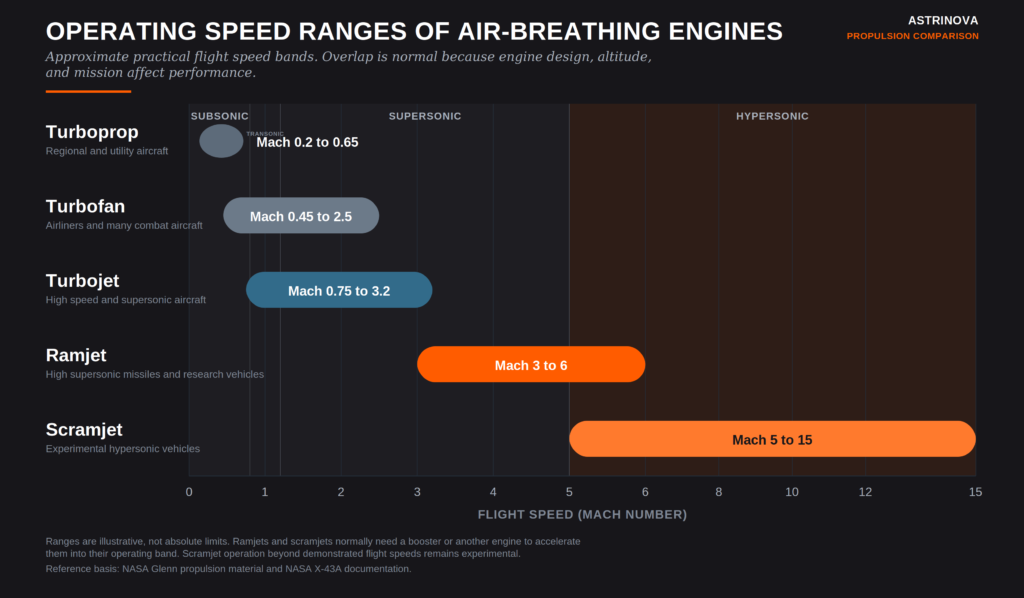
That simplicity comes with a hard limitation. A ramjet produces no static thrust and cannot start itself from a standstill, since the ram compression effect depends entirely on the vehicle already moving fast. Every ramjet vehicle needs a separate booster, typically a rocket, to accelerate it to a useful starting speed before the ramjet can take over and sustain flight. This is why ramjets have found their niche in missiles and a handful of experimental high speed aircraft rather than in anything that needs to take off under its own power. Conventional ramjets tend to be most effective from roughly Mach 3 up to around Mach 6, though the practical range varies with inlet design, fuel, and materials rather than sitting at one fixed boundary. [4]
The Scramjet: Combustion at Supersonic Speed
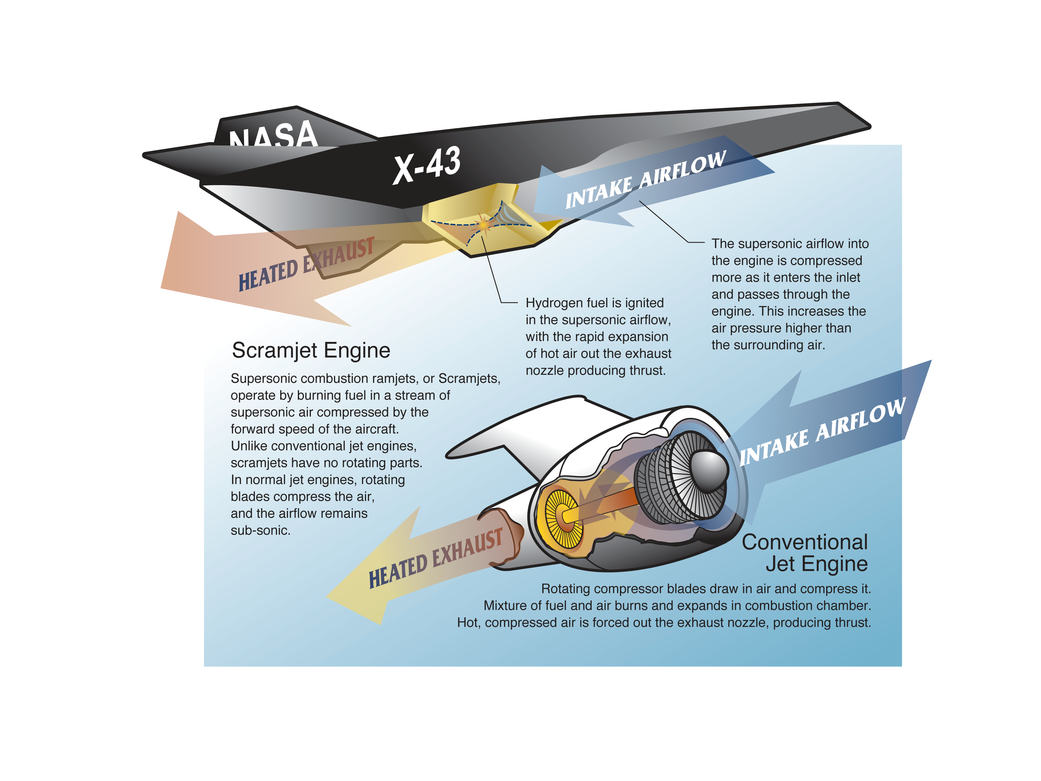
A scramjet, short for supersonic combustion ramjet, follows the same basic logic as a ramjet, using the vehicle’s forward motion for all of its compression, but makes one crucial change: the airflow inside a scramjet stays supersonic all the way through the engine, including through the combustion chamber itself. A ramjet slows air to subsonic speed before burning fuel in it. A scramjet burns fuel in air still moving faster than the speed of sound, which avoids the severe heating and pressure losses that would come from decelerating hypersonic airflow all the way down.
Igniting and sustaining stable combustion in a supersonic airstream is a genuinely difficult engineering problem, since the fuel and air have only milliseconds of contact time before they are swept out of the combustor. NASA’s X-43A demonstrated that it could be done in the real world. On November 16, 2004, the unmanned, 12 foot vehicle was boosted by a Pegasus rocket from a B-52 carrier aircraft and reached Mach 9.6 at about 110,000 feet using a hydrogen fueled scramjet, a speed record for an air breathing aircraft that has not been broken since. [5] An earlier X-43A flight in March 2004 had already shown sustained scramjet combustion at Mach 6.83, a result formally recognized by Guinness World Records. [6]
Scramjets remain experimental technology rather than a mature propulsion option. They share the ramjet’s inability to produce thrust from a standstill and need boost assistance to reach operating speed, and materials able to survive sustained hypersonic heating over long durations remain an active area of research rather than a solved problem. No scramjet has yet flown a long duration, reusable mission, and current programs remain focused on short test flights and specific defense applications rather than routine operational use.
Choosing an Engine: Why No Single Type Wins Everywhere
No single jet engine design is simply better than the rest. Each one is a set of tradeoffs suited to a particular speed range, mission, and economic constraint. A high bypass turbofan is the right answer for a long haul airliner because fuel burn and noise dominate the economics of that mission. A turboprop wins on a short regional route where fuel efficiency at low speed and short runway performance matter more than outright cruise speed. A low bypass turbofan still makes sense where a fighter needs afterburning thrust for brief bursts of supersonic speed. Turboshafts are the preferred choice for most medium and large helicopters, where a rotor system, not a jet of exhaust, is the actual point of the aircraft. Ramjets and scramjets sit at the far end of the speed spectrum, where conventional rotating compressors become impractical due to extreme inlet temperatures, pressure losses, mechanical complexity, and material limits, but their inability to self start keeps them confined to missiles and experimental research vehicles rather than everyday aviation.
Every design covered here is really just a different answer to the same question: at what speed does this vehicle need to fly, and what is the lightest, most reliable way to compress air and add heat to it at that speed.
Key Takeaways
- Strictly, only designs whose thrust comes mainly from a fast exhaust jet are jet engines in the narrow technical sense. Turboprops and turboshafts are gas turbine engines that deliver most of their power through a shaft, though the broader term jet engine is used loosely across all of them in everyday aviation writing.
- All the air breathing engines discussed here can be analyzed using the Brayton cycle. Turbojets, turbofans, turboprops, and turboshafts use compressors and turbines, while ramjets and scramjets rely on inlet compression and contain neither component.
- Turbojets send all intake air through the core and produce high exhaust velocity, but their noise and fuel consumption have pushed them out of both commercial and modern military service.
- Turbofans bypass a share of intake air around the core rather than through it, with high bypass designs sending far more air around the core than low bypass designs do. GE’s GE9X reaches an approximate bypass ratio of 10 to 1 and roughly 10 percent better fuel efficiency than the GE90 it replaces.
- Turboprops and turboshafts send most of their power to a propeller or a rotor shaft rather than a jet of exhaust, making them efficient at lower speeds and, for turboshafts, the preferred choice for most medium and large helicopters.
- Ramjets compress air using only the vehicle’s forward speed and have no rotating parts, but they cannot produce thrust from a standstill and need a separate booster to reach operating speed.
- Scramjets keep airflow supersonic through combustion itself, allowing far higher speeds than ramjets. NASA’s X-43A proved this works, reaching Mach 9.6 in 2004, a record that still stands for air breathing flight.
- Engine choice is a tradeoff between speed range, fuel efficiency, noise, and mission requirements, not a search for one universally superior design.
Frequently Asked Questions
What is the main difference between a turbojet and a turbofan?
A turbojet sends all of its intake air through the compressor, combustor, and turbine before it exits as high speed exhaust. A turbofan adds a large front fan and bypasses a share of that air around the core instead, which lowers average exhaust speed, cuts fuel burn, and reduces noise, which is why turbofans replaced turbojets in almost all commercial airliners and most modern jet powered military aircraft.
Are turboprops and turboshafts technically jet engines?
Not in the strict propulsion sense. Most of their useful output is delivered as shaft power to a propeller or rotor rather than as a fast exhaust jet, so propulsion engineers classify them as gas turbine engines. They are commonly grouped under jet engines in general aviation writing because they share the same core architecture.
Why do modern airliners use high bypass turbofans instead of turbojets?
Fuel efficiency and noise. Accelerating a large volume of air modestly, as a high bypass turbofan does, wastes less energy than accelerating a small volume of air to very high speed, which is closer to how a turbojet operates. That difference in propulsive efficiency translates directly into lower fuel costs and quieter operation for airlines.
Can a turboprop fly as fast as a jet?
Generally not as fast as a modern turbofan airliner. Turboprops are optimized for lower and moderate speeds, where a propeller still works well aerodynamically, though the fastest turboprop aircraft can approach the performance of some smaller jets.
What is the difference between a turboshaft and a turboprop?
Mechanically they are close, both extracting energy from a gas generator core through a turbine system. A turboprop sends that power through a gearbox to a propeller. A turboshaft sends it to something else entirely, most commonly a helicopter’s rotor system, with shaft output rather than jet thrust as the design’s purpose.
Why can’t ramjets or scramjets take off on their own?
Both rely entirely on the vehicle’s forward speed to compress incoming air, since neither has a mechanical compressor. At a standstill there is no ram effect to compress anything, so both engine types need a separate booster, usually a rocket, to reach a high enough speed before they can generate useful thrust on their own.
What is the fastest an air breathing engine has ever flown?
NASA’s X-43A reached Mach 9.6 at about 110,000 feet in November 2004 using a hydrogen fueled scramjet, a record for air breathing flight that has not been surpassed since.
Are scramjets used in any operational aircraft today?
No. Scramjet technology remains experimental. Programs such as NASA’s X-43A and the Air Force’s X-51A have demonstrated short duration powered flights, but no scramjet has yet supported a long duration, reusable, or routinely operational mission.
References
- National Aeronautics and Space Administration, Glenn Research Center. “Brayton Cycle.” NASA GRC. https://www.grc.nasa.gov/www/k-12/airplane/brayton.html
- GE Aerospace. “GE9X Engine.” https://www.geaerospace.com/commercial/aircraft-engines/ge9x
- National Aeronautics and Space Administration, Glenn Research Center. “Ramjet and Scramjet Thrust.” NASA GRC. https://www.grc.nasa.gov/www/k-12/airplane/ramth.html
- Purdue University, School of Aeronautics and Astronautics. “Ramjets and Scramjets.” https://engineering.purdue.edu/~propulsi/propulsion/jets/rjets.html
- National Aeronautics and Space Administration. “Supersonic Goes Hyper.” NASA. https://www.nasa.gov/image-detail/supersonic-goes-hyper
- National Aeronautics and Space Administration, Dryden Flight Research Center. “Guinness World Records Recognizes NASA X-43A Speed Record.” NASA, August 30, 2004. https://www.nasa.gov/?p=41904
Join the discussion
Comments are moderated and may take a little while to appear.