Quantum Physics
Double-Slit Experiment Explained: What It Really Shows About Quantum Mechanics
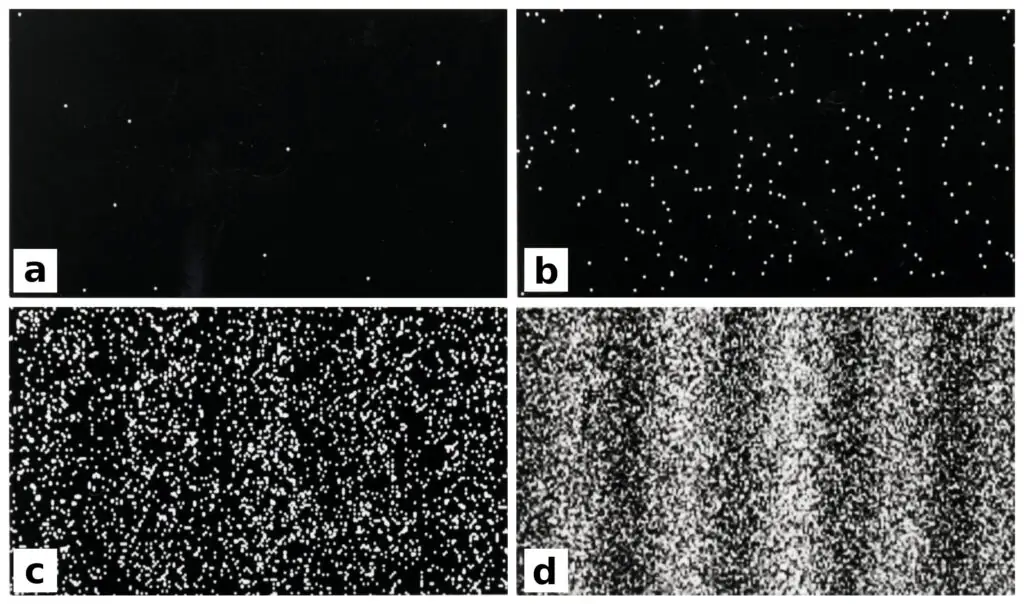
Fire particles one at a time and they still form an interference pattern, until something reveals which path they took.
September 2, 2026
●
11 min read
Quantum physics is the science of the very small, the realm of atoms, photons, and electrons, where the familiar rules of everyday objects no longer apply. Here, particles can exist in many possible states at once, two distant particles can stay linked as though they were one, and the simple act of measurement can change the outcome being measured. It is the most rigorously tested theory in the history of science, and still the strangest. Quantum mechanics underlies nearly all modern technology, from the laser in a barcode scanner to the transistor in every computer, and it now drives an emerging generation of quantum computers and ultra-precise sensors. This page collects Astrinova's reporting on the field: its foundational ideas, its ongoing experiments, and the open questions that remain genuinely unresolved.
A reading path through this topic, oldest first, roughly building up from the basics.