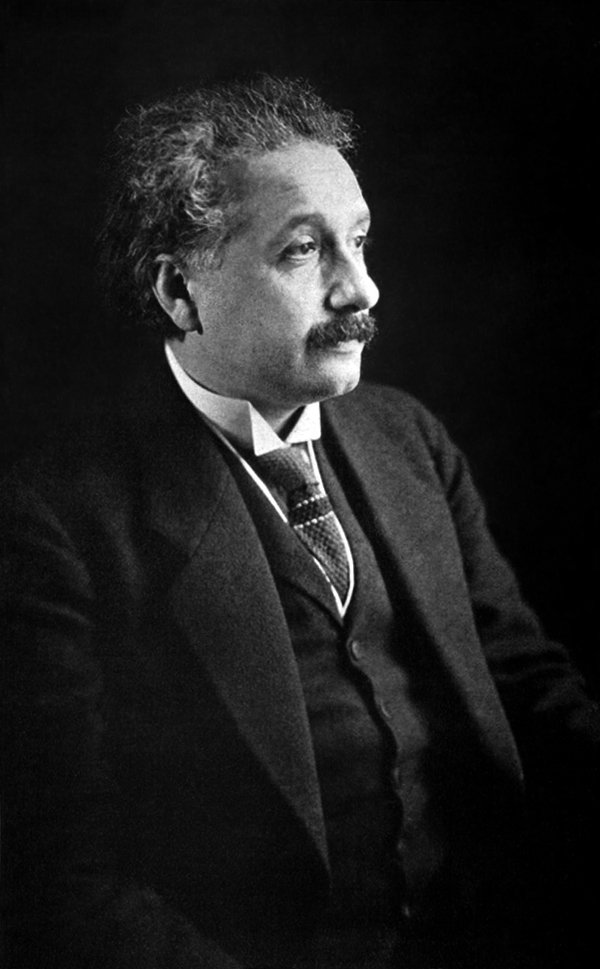
Albert Einstein spent decades trying to prove quantum mechanics was wrong, and one of his sharpest attacks became, nearly a century later, one of its most celebrated confirmations. He called it spooky action at a distance. Physicists now call it entanglement, and this is entangled particles explained the way the evidence actually settled it: in 2022, the experiments that proved Einstein wrong won the Nobel Prize in Physics.
Entangled particles explained: what it actually is
Two particles can become linked in such a way that they no longer have separate, independent descriptions. Instead, they share a single quantum state. Measure a property of one particle, its spin, its polarization, whatever the case may be, and the outcome for the other particle is fixed at that same instant, no matter how far apart they are. Not likely to match. Not correlated on average. Fixed.
That last part is what made entanglement so strange to physicists in the 1930s, and still trips people up today. It is not that the particles were secretly carrying matching instructions the whole time, waiting to be read. Careful experiments have ruled that explanation out. The correlation only becomes definite at the moment of measurement, and there is no obvious signal, no messenger, traveling between the two particles to coordinate the result.
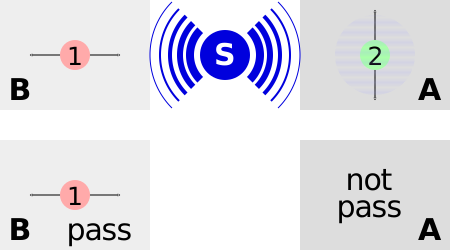
Image via Wikimedia Commons, licensed CC BY-SA 4.0.
Why Einstein thought it was a flaw
In 1935, Einstein, along with physicists Boris Podolsky and Nathan Rosen, published a paper arguing that this behavior exposed a real problem with quantum mechanics. Their argument, now known as the EPR paradox, went roughly like this: if measuring one particle can instantly tell you something certain about a second particle far away, then that second particle must have already possessed a definite property before it was measured. Quantum mechanics, though, does not describe particles that way. It only assigns probabilities until a measurement happens.
To Einstein, Podolsky, and Rosen, this meant quantum mechanics was leaving something out, some hidden property, a hidden variable, that determined the outcome in advance. If quantum theory could not account for that hidden reality, they argued, it could not be considered a complete description of nature.
Einstein did not dispute that the correlations were real. He disputed that quantum mechanics, on its own, could explain them.
For decades, this looked like a question philosophers would keep arguing about forever, since there seemed to be no way to actually test which side was right.
The theorem that changed everything
That changed in 1964, when physicist John Stewart Bell found a way to turn the argument into a real, testable prediction. Bell worked out a mathematical limit, an inequality, that any theory based on hidden variables would have to obey, no matter what those hidden variables actually were. Quantum mechanics, on the other hand, predicted that entangled particles would violate that limit under the right experimental conditions.
This was the breakthrough that mattered. Bell did not settle the debate himself. He gave physicists something they had never had before: a specific number to go out and measure.
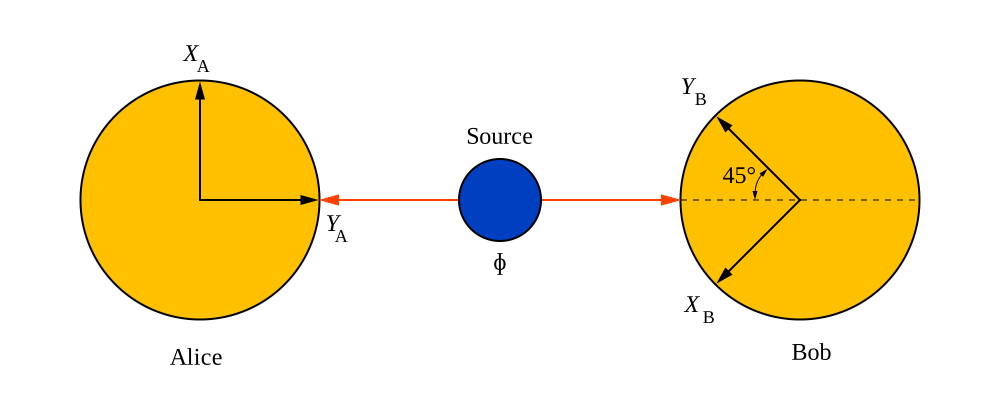
Image via Wikimedia Commons, licensed CC BY 3.0.
The experiments that settled it
Physicist John Clauser ran the first real tests of Bell’s inequality in the early 1970s, and found early evidence that quantum mechanics was right. Then in 1982, physicist Alain Aspect and his collaborators ran a sharper, more carefully controlled version of the experiment, closing loopholes that had left the earlier results open to doubt. Aspect’s team found a clear violation of Bell’s inequality, matching exactly what quantum mechanics predicted and ruling out the kind of hidden variable theory Einstein had hoped for.
Even Aspect’s result left two narrow gaps a determined skeptic could still point to. Maybe the detectors were quietly missing certain particles in a way that skewed the results. Maybe some hidden signal, even one respecting the speed of light, was sneaking between the two measurement stations before the experiment finished. In 2015, a team at Delft University closed both gaps at once, entangling electrons trapped in diamonds held 1.3 kilometers apart and running the test so quickly that no signal, however fast, could have passed between the two measurements in time. The result matched quantum mechanics exactly, with no loopholes left standing.
That result, and others like it in the years that followed, made the case airtight enough that in 2022, the Nobel Prize in Physics went to Alain Aspect, John Clauser, and Anton Zeilinger, honored for experiments with entangled photons that established the violation of Bell’s inequalities and helped launch an entirely new field: quantum information science.
Where you can actually see this at work
Entanglement is not confined to laboratories anymore. In 2017, Chinese researchers used a satellite named Micius to distribute entangled photon pairs between ground stations more than a thousand kilometers apart, and used the correlations between them to generate a shared cryptographic key. Anyone trying to intercept that key would disturb the entangled particles in a detectable way, since measuring a quantum system changes it. That makes the resulting communication provably secure in a way ordinary encryption is not, an approach called quantum key distribution.
Entanglement went from a thought experiment Einstein used to attack quantum mechanics to a working ingredient in real, secure communication systems.
Entangled particles are also a core building block of quantum computing, where linked qubits let a quantum computer explore many possible answers to a problem at once, and of quantum teleportation, where the exact state of one particle can be transferred onto another distant particle without physically moving anything through the space in between.
What entanglement is not
It is worth being precise here, because this is the most common place explanations of entanglement go wrong. Entanglement does not let you send a message faster than light. When you measure your particle and get a result, you instantly know what the distant particle’s result will be, but you have no way to control which result you get. There is no way to encode information into that outcome, because the result is random from your end. Your collaborator on the other side of the entangled pair sees an equally random result on theirs. It is only when the two of you later compare notes, through an ordinary, light speed limited channel, that the correlation between your results becomes apparent.
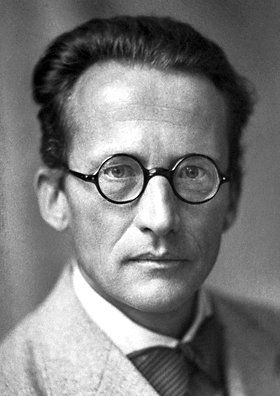
So nothing here breaks Einstein’s other great achievement, special relativity, and its speed limit on information. What Einstein got wrong was not relativity. It was his conviction that quantum mechanics needed something extra to be true, the same conviction that later drove Schrödinger to write down the equation that governs how these probabilities evolve in the first place.
Why This Matters
That is entangled particles explained in full: a phenomenon that stopped being a philosophical puzzle a long time ago. It is now a measured, repeatedly confirmed feature of nature, and increasingly, a working technology. Secure communication networks, early quantum computers, and next generation sensors all lean on the same strange correlation that once seemed like a flaw in quantum theory, the same correlation that quantum decoherence helps explain why we never see directly in everyday life.
The deeper lesson is about how physics settles its arguments. Einstein raised a real, serious objection, one of the sharpest thinkers of the twentieth century challenging one of its strangest theories. Quantum mechanics did not win that argument through better rhetoric. It won because Bell found a way to make the disagreement testable, and because experimenters spent decades building the apparatus precise enough to actually run the test.
Key Takeaways
- Entangled particles share a single quantum state, so measuring one instantly determines the outcome for the other, regardless of distance.
- Einstein argued in 1935 that this implied quantum mechanics was incomplete and needed hidden variables to explain the correlation.
- John Bell’s 1964 theorem turned that philosophical dispute into a testable prediction, by setting a limit that hidden variable theories could not exceed.
- Experiments starting with Clauser in the early 1970s, sharpened by Aspect in 1982, and closed of all remaining loopholes by a Delft team in 2015, confirmed that nature violates Bell’s limit exactly as quantum mechanics predicts, work recognized with the 2022 Nobel Prize in Physics.
- Entanglement cannot be used to send information faster than light, but it is already used for real applications, including satellite based quantum key distribution.
References
Einstein, A., Podolsky, B., Rosen, N. “Can Quantum-Mechanical Description of Physical Reality Be Considered Complete?” Physical Review 47, 777–780 (1935). https://doi.org/10.1103/PhysRev.47.777
Bell, J. S. “On the Einstein-Podolsky-Rosen Paradox.” Physics 1, 195–200 (1964).
Aspect, A., Grangier, P., Roger, G. “Experimental Realization of Einstein-Podolsky-Rosen-Bohm Gedankenexperiment: A New Violation of Bell’s Inequalities.” Physical Review Letters 49, 91 (1982). https://doi.org/10.1103/PhysRevLett.49.91
Hensen, B. et al. “Loophole-free Bell inequality violation using electron spins separated by 1.3 kilometres.” Nature 526, 682–686 (2015). https://doi.org/10.1038/nature15759
“The Nobel Prize in Physics 2022: Press Release.” The Royal Swedish Academy of Sciences. https://www.nobelprize.org/prizes/physics/2022/press-release/
Yin, J. et al. “Entanglement-based secure quantum cryptography over 1,120 kilometres.” Nature 582, 501–505 (2020). https://doi.org/10.1038/s41586-020-2401-y
Join the discussion
Comments are moderated and may take a little while to appear.