
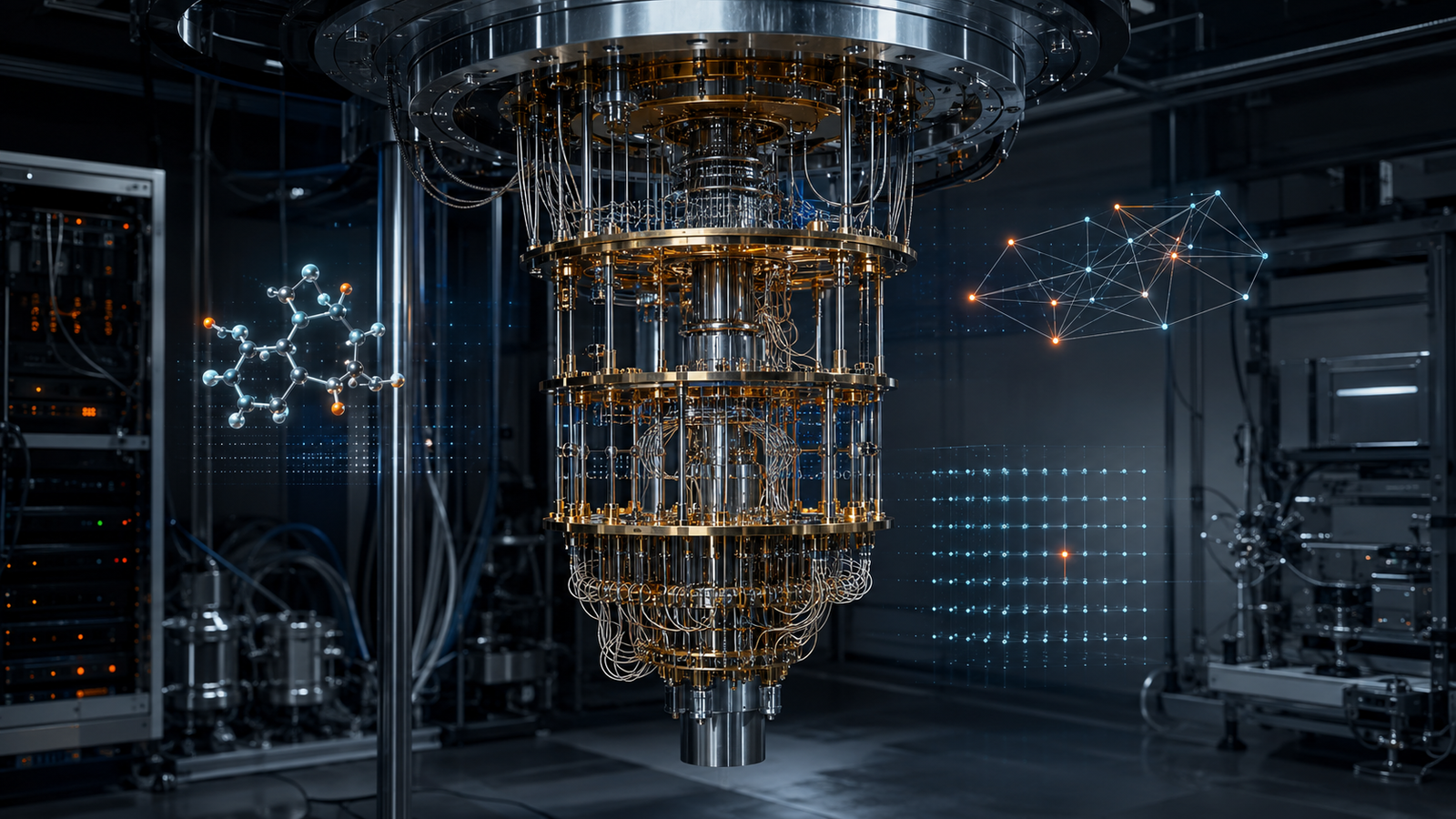
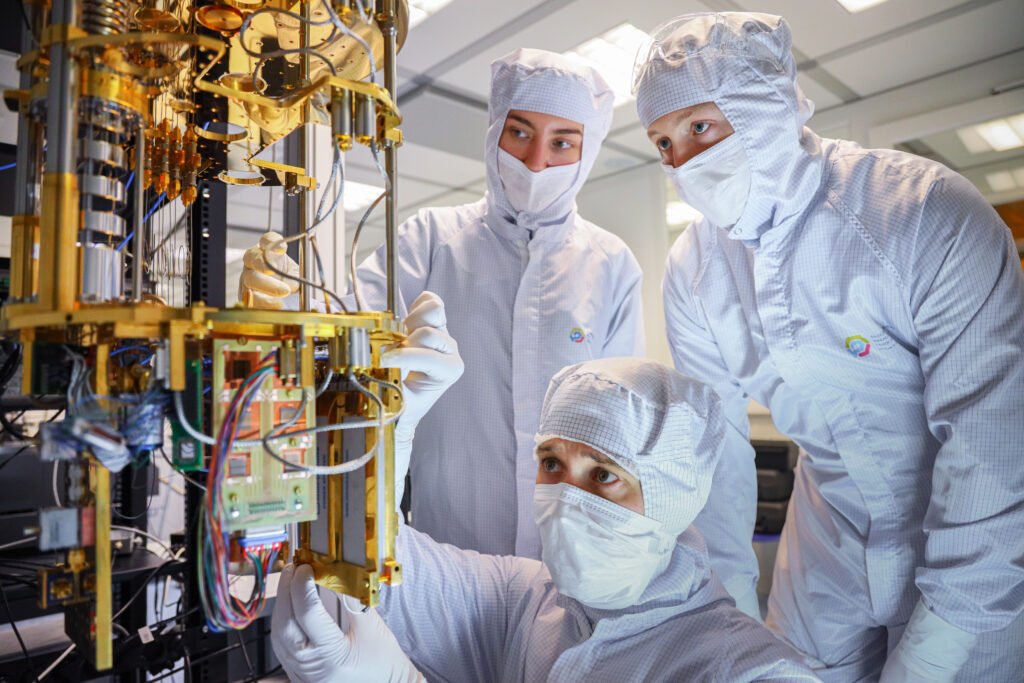
In September 2025, a team at HSBC fed real bond trading data through an IBM quantum processor and reported that the hybrid system predicted trade outcomes up to 34 percent better than the bank’s standard classical methods. A month later, Google published a Nature paper claiming its Willow chip had run a physics algorithm roughly 13,000 times faster than the best known classical approach. Early in 2026, the startup QuEra demonstrated 96 error corrected logical qubits, more than doubling the previous record.
Read those headlines quickly and you might conclude that quantum computers have arrived, that they are about to break the internet’s encryption, revolutionize medicine, and make supercomputers obsolete. None of that is true. Read the same results carefully and a different picture emerges, one that is genuinely impressive but far more modest than the hype suggests.
So what can quantum computers do, honestly, in 2026? The short answer: they can run scientific experiments that probe quantum physics itself, they can serve as testbeds for chemistry, materials, and finance research, and for a handful of carefully chosen tasks they can now outperform classical computers in ways that are hard to dispute. What they cannot yet do is solve practical problems, at commercial scale, better and cheaper than the classical machines we already have. They remain noisy, specialized, expensive laboratory instruments, improving fast but still years away from broad usefulness.
This article walks through the evidence, separating what has been demonstrated from what has merely been promised.
Why a Quantum Computer Is Not Just a Faster Computer
An ordinary computer stores information in bits, tiny switches that are either 0 or 1. A quantum computer uses qubits, physical systems such as superconducting circuits, individual atoms, or trapped ions that obey the rules of quantum mechanics.
Three quantum properties make qubits special. Superposition means a qubit can exist in a blend of 0 and 1 at the same time, described by two numbers called amplitudes. Entanglement links qubits together so that the state of one cannot be described independently of the others, no matter how the group is arranged. Interference lets the amplitudes of different computational paths reinforce or cancel each other, the way overlapping water waves build peaks and flatten troughs.
A popular but misleading story says that because n qubits can hold a superposition of 2 to the power n states, a quantum computer simply tries every answer at once and reads out the right one. That is not how it works. When you measure a quantum system, the superposition collapses and you get a single random outcome. If you did nothing clever beforehand, that outcome is no better than a guess.
A quantum computer does not test every answer at once. It choreographs interference so that wrong answers cancel and right answers reinforce, and that choreography only exists for certain problems.
The real trick is designing sequences of operations, called quantum gates, that use interference to boost the probability of measuring a correct answer while suppressing the wrong ones. Mathematicians have found such choreographies for only a limited set of problems: factoring large numbers, searching unstructured lists with a modest speedup, simulating quantum systems, and a few families of algebraic and sampling tasks. For most everyday computation, spreadsheets, video rendering, databases, web servers, no quantum speedup is known, and for many of those tasks none is believed to exist.
This is why a quantum computer is best understood not as a faster computer but as a different kind of computer, one that is extraordinary at a narrow class of problems and mediocre or useless at everything else.
The Hardware Landscape in 2026
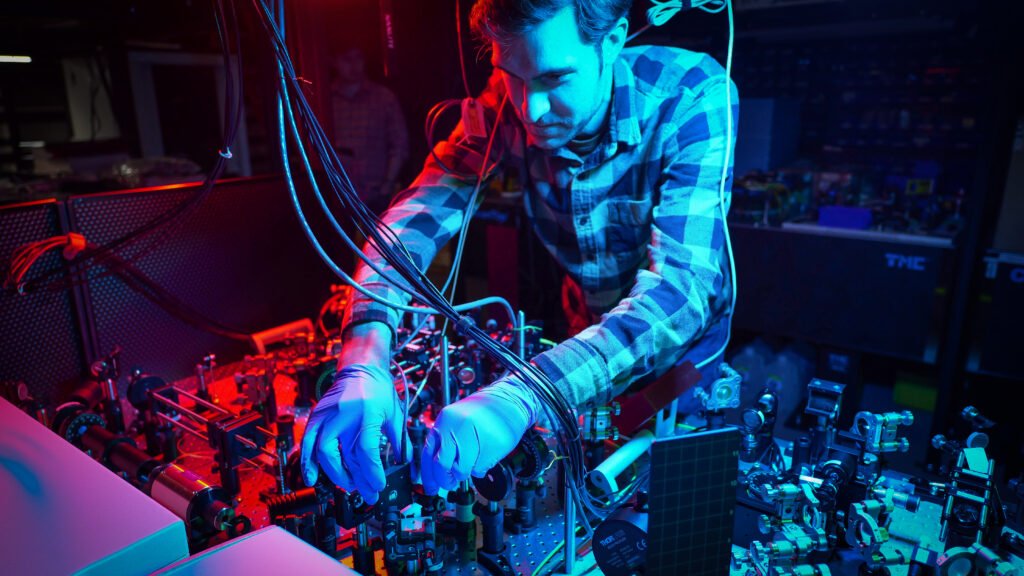
No single technology has won the race to build qubits. Several platforms compete, each with distinct strengths.
Superconducting qubits, used by Google, IBM, and Rigetti, are tiny circuits chilled to near absolute zero. They switch fast and can be manufactured with chip fabrication techniques, but they are noisy and hold their quantum state for only microseconds to milliseconds. Google’s Willow has 105 physical qubits. IBM’s Nighthawk processor, delivered at the end of 2025, carries 120 qubits with 218 tunable couplers connecting them.
Trapped ions, the approach of Quantinuum and IonQ, use individual charged atoms held in electromagnetic fields. They are slower but far more accurate. Quantinuum’s Helios system, with 98 physical qubits, reported a two qubit gate fidelity of 99.921 percent, currently the best published figure for a commercial machine, per the company’s own SEC filing.
Neutral atoms, pursued by QuEra, Pasqal, and Atom Computing, trap uncharged atoms with laser tweezers and can be rearranged mid computation. Harvard researchers demonstrated a continuously operating machine exceeding 3,000 atoms in 2025, and QuEra’s 96 logical qubit result came from just 448 physical atoms, the company reported in its Nature paper.
Photonic systems (PsiQuantum, Xanadu) encode information in light and can operate closer to room temperature, while semiconductor spin qubits (Intel, Diraq, Silicon Quantum Computing) aim to piggyback on the silicon chip industry. Both remain earlier in development for general purpose computing.
Quantum annealers, built by D-Wave, are a separate category. They contain thousands of qubits but are not universal computers. They solve one kind of task, finding low energy configurations of a physical system, which maps onto certain optimization and simulation problems. A D-Wave machine cannot run Shor’s algorithm or general quantum programs, and its qubit counts should never be compared directly with gate based machines.
Why more qubits does not mean more power
Raw qubit count is the most quoted and least informative number in quantum computing. What matters is how well qubits work: gate fidelity (how often an operation succeeds), coherence time (how long a qubit survives before noise scrambles it), connectivity (which qubits can talk to each other), and circuit depth (how many operations you can chain before errors overwhelm the signal). A machine with 1,000 mediocre qubits is often less capable than one with 100 excellent ones. Today’s best two qubit gates still fail roughly once in every thousand operations, while useful large computations may require billions of operations. Bridging that gap is the job of error correction, which we return to below.
What Can Quantum Computers Do in 2026?
Chemistry and materials: real physics, small molecules
Simulating quantum systems is the application quantum computers were originally proposed for, and it remains their most natural fit. Molecules, catalysts, battery electrolytes, and superconductors are quantum objects, and classical computers struggle to model their electrons exactly as the systems grow.
What has been demonstrated so far is meaningful but small. In 2023, IBM researchers used a 127 qubit processor to compute properties of a magnetic model beyond brute force classical simulation, publishing the result in Nature as evidence of quantum utility before fault tolerance. Classical researchers responded within weeks, and a later academic survey of advantage claims found that much of the result could be reproduced with clever approximation methods on ordinary hardware. Quantinuum’s Helios launch in late 2025 featured simulations of magnetism and superconductivity relevant to materials research, the company said at the time. These are legitimate scientific experiments, mostly run through hybrid schemes in which a classical computer optimizes parameters while the quantum chip evaluates the hard quantum part.
What has not happened: no quantum computer has designed a drug, discovered a commercial catalyst, or simulated a pharmaceutically relevant molecule more accurately than the best classical methods. The molecules studied on quantum hardware remain far smaller than what density functional theory and modern classical techniques handle routinely. The crossover point, where quantum machines model chemistry that classical machines genuinely cannot, is still ahead of us.
Optimization: promising, unproven
Companies have tested quantum approaches on delivery routing, scheduling, grid management, and portfolio construction. Nearly all of these demonstrations share the same caveats: the problems are small enough for classical computers to solve easily, and the quantum results are compared against basic rather than state of the art classical methods. Careful benchmarking studies repeatedly find that top classical heuristics match or beat current quantum optimizers on practical workloads.
Quantum annealing deserves separate mention because it is often confused with universal quantum computing. D-Wave’s annealers have shown intriguing performance on physics inspired problems, and in March 2025 the company published a Science paper claiming its Advantage2 processor performed a magnetic materials simulation beyond the reach of any classical computer, D-Wave said. Classical researchers pushed back hard. Physicists at EPFL and the Flatiron Institute showed that tensor network and Monte Carlo methods could reproduce large parts of the claimed computation on ordinary workstations and even laptops, while D-Wave countered that the classical work did not cover its hardest problem instances. The dispute remains genuinely unresolved, which is itself informative: even the strongest optimization related advantage claims sit close enough to the classical frontier that experts disagree about whether the line has been crossed.
Machine learning: an intriguing experiment, not a revolution
Quantum machine learning explores whether quantum circuits can transform data in ways that help learning algorithms. Ideas include quantum kernels, which measure similarity between data points using quantum states, and variational circuits, which act as small trainable quantum models.
The most discussed 2025 result came from the HSBC and IBM collaboration. The team encoded features of bond trading requests into quantum states on IBM Heron processors, measured the transformed features, and fed them into ordinary classical models. Predictions of whether trades would fill at quoted prices improved by up to 34 percent over the bank’s classical baseline, per HSBC and IBM’s own figures. Intriguingly, the improvement appeared on real noisy hardware but not in noiseless simulations, suggesting the hardware noise itself played some role, IBM noted in its account of the trial. It is a striking result, published initially as a preprint rather than in a peer reviewed journal, and it has not yet been independently replicated or shown to survive against every strong classical feature engineering method. No quantum machine learning system anywhere has demonstrated a decisive production scale advantage over leading classical AI. Today’s large language models and recommendation systems run entirely on classical GPUs, and nothing in 2026 changes that.
Cryptography: the threat is real, the timeline is not now
Shor’s algorithm, published in 1994, showed that a sufficiently large quantum computer could factor the huge numbers underpinning RSA encryption and solve the related problem behind elliptic curve cryptography. Grover’s algorithm offers a smaller, quadratic speedup for brute force searching, which mainly means symmetric keys should be lengthened, not replaced.
No quantum computer in 2026 can break modern internet encryption. Running Shor’s algorithm on RSA 2048 requires billions of clean logical operations, far beyond machines that hold a few dozen to a hundred logical qubits. The most cited resource estimate, a 2025 preprint by Google researcher Craig Gidney, still requires hardware nobody has built. In his words: “I estimate that a 2048 bit RSA integer could be factored in less than a week by a quantum computer with less than a million noisy qubits.” That figure, a million good physical qubits compared with today’s few hundred, itself fell twentyfold from his 2019 estimate of 20 million, which is why security agencies are uneasy.
The genuine near term threat is called harvest now, decrypt later: adversaries recording encrypted traffic today so they can decrypt it once capable machines exist, a concern flagged repeatedly by government cybersecurity agencies. That is why the US National Institute of Standards and Technology finalized its first post quantum cryptography standards in August 2024, FIPS 203, 204, and 205, based on mathematical problems believed hard even for quantum computers. Browsers, operating systems, and governments are already migrating. Your bank account, your cryptocurrency wallet, and military communications are not being broken by quantum computers in 2026, and responsible planning, not panic, is the correct response.
Scientific simulation: where the real wins are happening
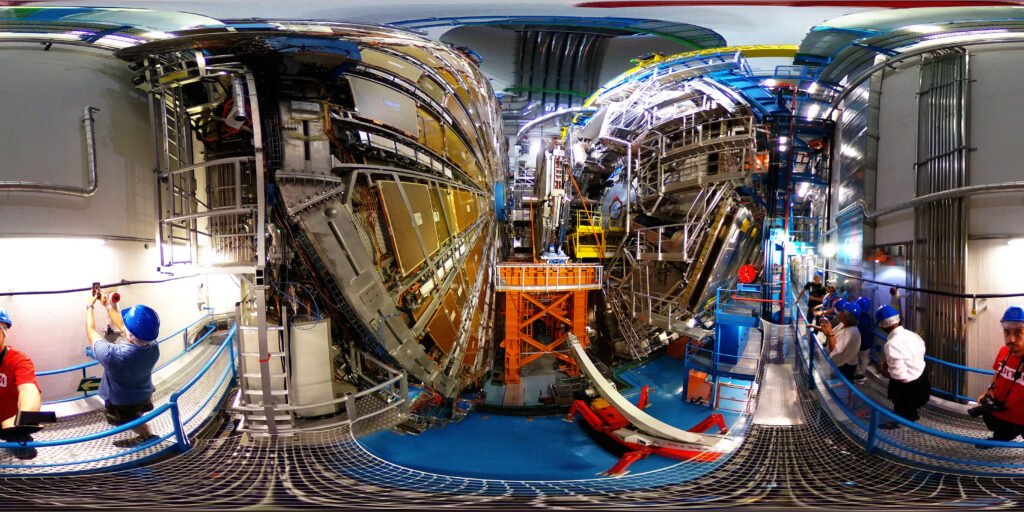
The clearest genuine accomplishments of current machines are physics experiments. Quantum processors have simulated the dynamics of magnetic materials, studied how quantum information scrambles in chaotic systems, created exotic states of matter such as time crystals and non Abelian anyons, and begun probing toy models drawn from particle physics and quantum field theory. Google’s Quantum Echoes experiment, published in Nature in October 2025, measured a quantity called an out of time order correlator that tracks how disturbances spread through an entangled system, and the team behind it argued the measurement was verifiable and about 13,000 times faster than the best classical simulation. These results advance physics itself, which is valuable, even though none of them yet solves a problem an engineer or a chemist was waiting on.
Finance: experiments, not earnings
Beyond the HSBC trial, banks including JPMorgan, Goldman Sachs, and Citigroup run quantum research programs covering risk analysis, derivatives pricing through quantum versions of Monte Carlo sampling, and fraud detection. The theoretical speedups for Monte Carlo methods are real on paper but require error corrected machines that do not exist yet. One concrete milestone: in March 2025, JPMorgan Chase, Quantinuum, and academic collaborators generated certified random numbers on a trapped ion machine, randomness whose quality can be mathematically verified even if the hardware is untrusted, and published the result in Nature. It is a genuine first with security applications, though a narrow one. No bank earns money today because of a quantum computer.
Related technologies that are not quantum computing
Several quantum technologies get mixed into the conversation but are separate things. Quantum random number generators use quantum physics to produce unpredictable numbers and already ship in commercial products, including phone chips. Quantum key distribution shares encryption keys over fiber or satellite links with security rooted in physics. Quantum sensors measure gravity, magnetic fields, and time with extreme precision and are arguably the most commercially mature quantum technology of all. All of these are real and useful. None of them is a computer.
What Quantum Computers Cannot Do in 2026
A short list is worth stating plainly, because each item is claimed somewhere on the internet. Current quantum computers cannot replace your laptop or phone, and never will for ordinary software. They cannot run apps, games, or spreadsheets efficiently. They cannot instantly solve every hard problem; most problems get no quantum speedup at all. They cannot predict stock markets, which are limited by information, not computing power. They cannot break today’s encryption. They cannot simulate the universe, design superintelligent AI, or check every possible answer and hand you the right one. They do not guarantee optimal solutions to optimization problems. And they will not make supercomputers obsolete; classical high performance computing is improving too, which keeps raising the bar quantum machines must clear.
Has Quantum Advantage Actually Been Achieved?
The vocabulary matters. Quantum supremacy or quantum advantage means performing any task, however artificial, faster than any classical computer could. Practical or utility scale advantage means doing so for a problem somebody actually cares about. The first has arguably been achieved. The second has not been clearly demonstrated.
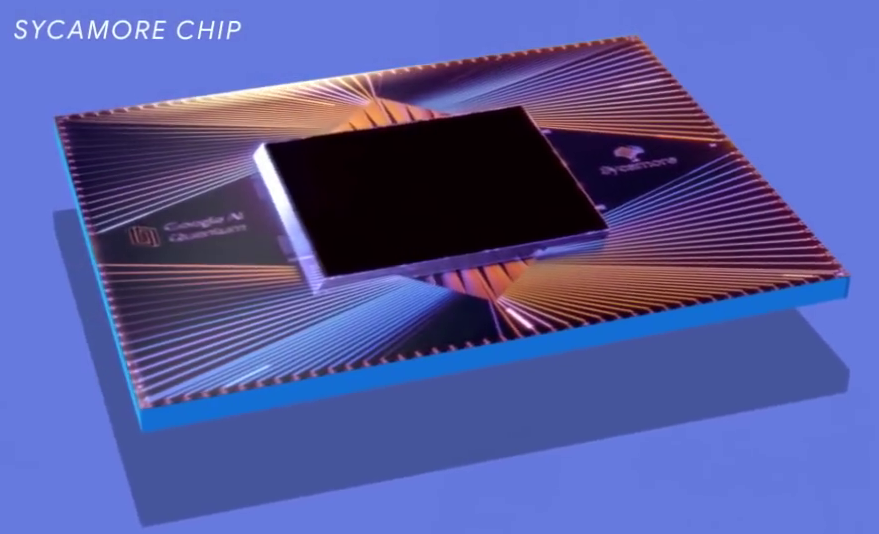
Google’s famous 2019 experiment on the 53 qubit Sycamore chip sampled outputs of random circuits in 200 seconds and estimated a classical supercomputer would need 10,000 years to do the same, the original Nature paper claimed. Classical algorithm designers then spent five years shrinking that gap, eventually reproducing the result on GPU clusters in under two minutes. The 2019 claim, taken literally, was refuted. But hardware improved as well. Willow’s 2024 version of the same benchmark is estimated by Google to require 10 septillion years classically, and the newer Quantum Echoes result adds a task that is verifiable and connected to real physics. Each round of this contest between quantum hardware and classical ingenuity has taught the field something, and the honest summary in 2026 is this: quantum computers demonstrably do things classical computers cannot match today, on tasks chosen to favor quantum hardware, while every claim of advantage on a commercially valuable problem remains either disputed, unreplicated, or too narrow to generalize.
Error Correction: The Number That Actually Matters

Qubits are fragile. Heat, vibration, stray electromagnetic fields, even cosmic rays flip their states. The solution, proposed by Peter Shor in 1995, is quantum error correction: spread one qubit’s worth of information across many physical qubits, arranged in structures such as the surface code, so that errors can be detected and fixed without ever directly reading the protected information. The bundle behaves as a single logical qubit that is more reliable than any of its parts.
This only works above a quality threshold. If physical qubits are too noisy, adding more of them makes things worse. In December 2024, Google’s Willow chip provided the first convincing demonstration that superconducting hardware had crossed that threshold: each time the researchers enlarged the error correcting code, from a 3 by 3 patch to 5 by 5 to 7 by 7, the logical error rate fell by half, Google reported. “We are finally below the threshold,” said Google researcher Michael Newman. Caltech physicist John Preskill, who coined the term quantum supremacy, called the demonstration that error correction extends how long a qubit stores information “a notable milestone.”
The story of 2025 and 2026 is not bigger qubit counts. It is the shift from counting physical qubits to counting logical ones.
Progress since then has been rapid across platforms. Microsoft and Atom Computing entangled 24 logical qubits on neutral atom hardware, per independent industry tracking. Quantinuum’s Helios produced 48 logical qubits from just 98 physical ones using highly efficient codes, the company says. QuEra’s January 2026 Nature paper demonstrated 96 logical qubits from 448 atoms with error suppression below threshold. IBM, betting on a different code family called quantum low density parity check codes, says it has demonstrated real time error decoding in under 480 nanoseconds and targets a fault tolerant machine named Starling, with roughly 200 logical qubits, by 2029.
Perspective is still required. Dozens of logical qubits is a milestone; useful applications such as industrial chemistry or codebreaking are estimated to need hundreds to thousands of logical qubits executing billions of operations, which on most architectures translates to hundreds of thousands or millions of physical qubits. Nobody has run a complete meaningful algorithm entirely within the fault tolerant regime yet. The engineering path is now visible, which is new. The destination has not been reached.
Partners, Not Replacements, for Supercomputers
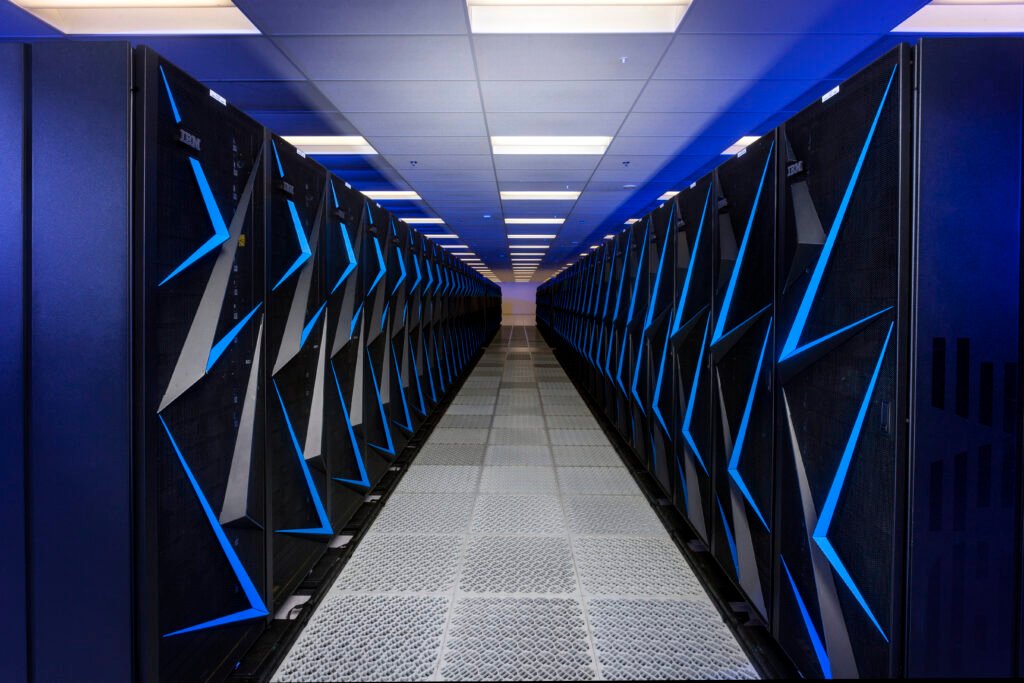
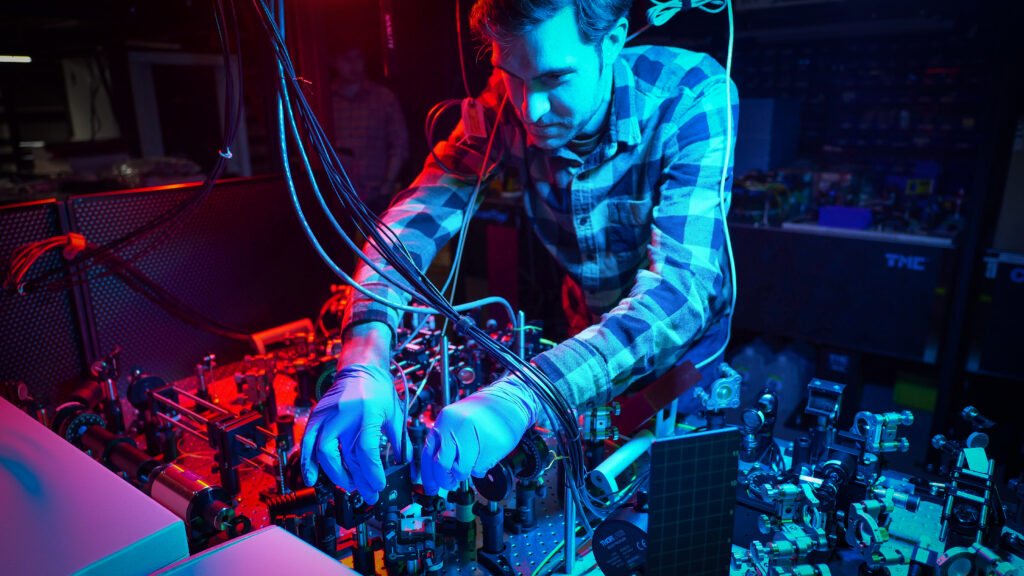
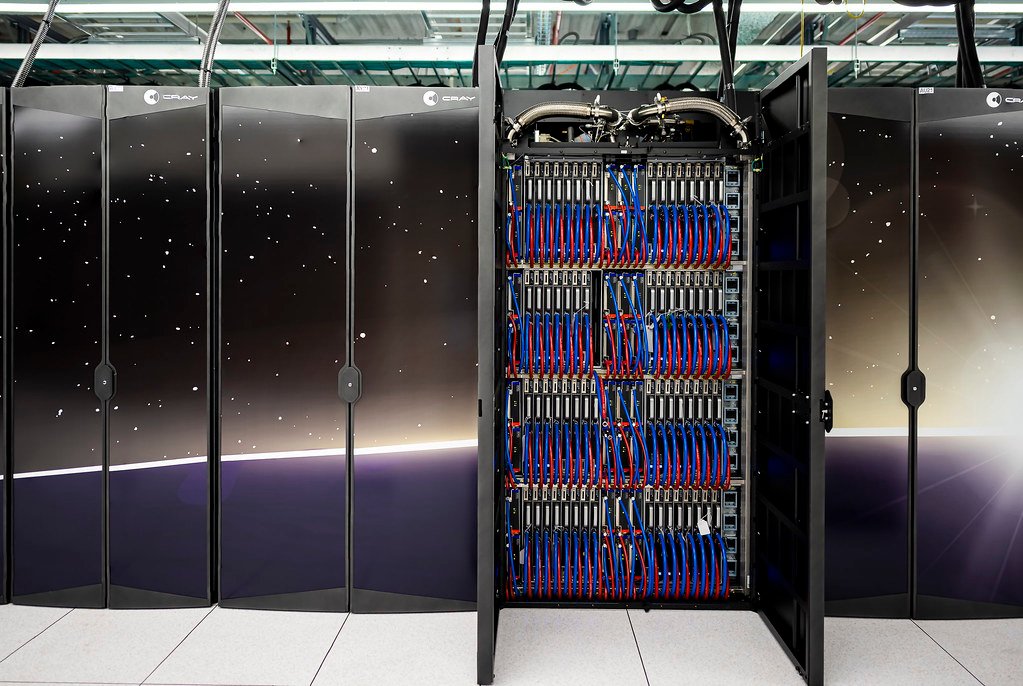
Even in optimistic futures, quantum processors will not sit on desks. They live in dilution refrigerators or laser laboratories, accessed through the cloud, and they are being integrated into high performance computing centers as specialized accelerators alongside CPUs and GPUs, much as GPUs themselves began as niche accelerators. Nearly every promising application is hybrid: classical machines handle data preparation, optimization loops, and error decoding, while the quantum chip executes only the specific subroutine where quantum physics helps. IBM’s stated 2026 goal of demonstrating quantum advantage explicitly pairs its processors with classical supercomputing. The realistic future is quantum and classical computing together, each doing what it does best.
The Most Realistic Near Term Uses, Ranked
The table below sums up what can quantum computers do most reliably right now, ranked from strongest evidence to weakest.
| Application area | Current status in 2026 | Evidence level | Main limitation | Realistic outlook |
|---|---|---|---|---|
| Physics research and quantum simulation | Active experiments on real hardware, peer reviewed results | Strong | Systems studied are small and specialized | Continued genuine scientific value through the decade |
| Chemistry and materials | Small molecule and model system demonstrations | Moderate | Classical methods still match or beat quantum results | Possible advantage with early fault tolerant machines |
| Random number certification | Demonstrated and published in Nature | Strong but narrow | Niche use case | Commercial security products within years |
| Finance and machine learning | Promising single studies such as the HSBC trial | Preliminary | Unreplicated, classical baselines keep improving | Unclear; watch for independent replication |
| Optimization and logistics | Small demonstrations, disputed annealing claims | Weak to contested | Classical heuristics remain extremely strong | No proven advantage on the horizon |
| Breaking encryption | Not possible on any current machine | None today, credible future threat | Needs roughly a million good physical qubits | Plausibly 2030s; migrate to post quantum cryptography now |

A Realistic Timeline
The next two to five years. Expect logical qubit counts to climb from tens into the low hundreds, with the first small algorithms run fully inside error correction. IBM targets fault tolerant Starling by 2029, QuEra targets hundreds of logical qubits, and DARPA has launched a program to independently verify whether any company can reach utility scale by 2033. Company roadmaps have historically slipped, so treat every date as an intention, not a schedule.
Five to ten years. If error correction keeps scaling, this is the window where early fault tolerant machines could tackle chemistry and materials problems beyond classical reach, and where the cryptographic threat starts becoming concrete. Expert surveys place the arrival of a cryptographically relevant machine anywhere from the early 2030s onward, with wide disagreement among specialists.
Beyond ten years. Large scale machines with thousands of logical qubits, the kind needed for full industrial simulation or codebreaking, require solving unglamorous problems that get little press: manufacturing yield, cryogenic wiring for millions of control lines, power consumption, decoder electronics, software, and cost. Any of these could add years. Meanwhile classical computing and classical algorithms keep advancing, a moving target that has repeatedly erased claimed quantum advantages, as the earlier Sycamore and annealing disputes show. Both radical acceleration and long plateaus remain possible.
Why This Matters
Quantum computing in 2026 sits at an awkward and fascinating stage: too real to dismiss, too immature to use. The below threshold error correction results of 2024 through 2026 answered the deepest scientific question in the field, whether large reliable quantum computers are possible at all. The evidence now says yes. What remains is a decade class engineering program, and engineering programs are won by patient, measurable progress rather than press releases.
So, what can quantum computers do that matters today? Mostly physics research, with early hints of value in chemistry and finance. For readers, the practical guidance is simple. Distrust any claim that quantum computers are about to transform an industry this year. Distrust equally any claim that the whole field is hype; the physics results are real and independently verified. Watch two numbers: logical qubit counts and logical error rates. When you see machines with hundreds of clean logical qubits running algorithms people outside physics care about, the revolution will have started. In 2026, we can finally see it coming. We are not there yet.
Key Takeaways
- Quantum computers in 2026 are powerful physics instruments, not practical business machines. Their clearest achievements are scientific experiments on quantum systems themselves.
- Error correction has crossed its critical threshold. Google, QuEra, Quantinuum, and others have shown that adding qubits can reduce errors, and the field now measures progress in logical qubits, not physical ones.
- No quantum computer can break modern encryption today. The realistic threat is data harvested now being decrypted by future machines, which is why post quantum cryptography migration has already begun.
- Every claim of practical quantum advantage remains disputed, unreplicated, or narrow. Classical algorithms have repeatedly caught up with quantum demonstrations.
- The most plausible path runs through hybrid systems, with quantum processors acting as specialized accelerators alongside classical supercomputers rather than replacing them.
Frequently Asked Questions
Can I buy or use a quantum computer in 2026?
You can rent time on real quantum processors through cloud services from IBM, Google, Amazon, and Microsoft, often free at small scale. You cannot buy one for home use, and there would be nothing useful to run on it if you could.
Will quantum computers break Bitcoin or my bank account?
Not today and not soon. Breaking the relevant encryption needs roughly a million high quality qubits running for days, per the most recent resource estimate. Current machines have a few hundred physical qubits. Standards bodies are moving everyone to quantum resistant encryption well before the threat matures.
What is the difference between physical and logical qubits?
Physical qubits are the raw noisy hardware devices. A logical qubit combines many physical qubits with error correction into one reliable unit. Useful applications require logical qubits, which is why a 100 qubit machine with excellent error correction can outperform a 1,000 qubit machine without it.
Has quantum advantage been proven?
For artificial benchmark tasks, yes, with strong evidence from Google’s Willow experiments. For commercially valuable problems, no claim has survived scrutiny without dispute.
When will quantum computers become genuinely useful?
Honest answer: nobody knows. Company roadmaps point to fault tolerant machines around 2029 to 2033, and early scientific usefulness exists already. Broad commercial value likely needs hundreds of logical qubits, plausibly arriving sometime in the 2030s if progress continues.
Sources
- Google Quantum AI. Quantum error correction below the surface code threshold. Nature, 2024. Peer reviewed paper, announced with the Willow processor. Overview: blog.google (accessed July 2026).
- American Physical Society, Physics Magazine. Cracking the Challenge of Quantum Error Correction. Physics 17, 176, December 2024. Independent analysis with expert commentary. physics.aps.org (accessed July 2026).
- Arute, F. et al. Quantum supremacy using a programmable superconducting processor. Nature 574, 505 to 510, 2019. Peer reviewed paper. DOI: 10.1038/s41586-019-1666-8.
- Aaronson era survey collective. A brief history of quantum vs classical computational advantage. arXiv:2412.14703, 2024, updated 2026. Preprint reviewing advantage claims and their classical refutations. arxiv.org/abs/2412.14703 (accessed July 2026).
- Google Quantum AI. Constructive interference at the edge of quantum ergodic dynamics (Quantum Echoes experiment). Nature, 2025. Peer reviewed paper. DOI: 10.1038/s41586-025-09526-6. Summary: phys.org (accessed July 2026).
- QuEra Computing and collaborators. Demonstration of 96 logical qubits with high rate error correcting codes on a neutral atom processor. Nature, January 2026. Peer reviewed paper. DOI: 10.1038/s41586-025-09848-5.
- Quantinuum Inc. Form S-1 registration statement, US Securities and Exchange Commission, 2026. Corporate filing containing Helios technical specifications. sec.gov (accessed July 2026).
- Constellation Research. IBM launches IBM Quantum Nighthawk processor. November 2025. Independent industry analysis. constellationr.com (accessed July 2026).
- Moor Insights and Strategy. IBM’s vision for a large scale fault tolerant quantum computer by 2029. June 2025. Independent industry analysis. moorinsightsstrategy.com (accessed July 2026).
- Kim, Y. et al. Evidence for the utility of quantum computing before fault tolerance. Nature 618, 500 to 505, 2023. Peer reviewed paper describing the IBM 127 qubit Eagle experiment. DOI: 10.1038/s41586-023-06096-3.
- Gidney, C. How to factor 2048 bit RSA integers with less than a million noisy qubits. arXiv:2505.15917, 2025. Preprint, Google Quantum AI. arxiv.org/abs/2505.15917 (accessed July 2026).
- National Institute of Standards and Technology. Post quantum cryptography standards FIPS 203 (ML KEM), FIPS 204 (ML DSA), and FIPS 205 (SLH DSA), finalized August 2024. Government standards. Independent overview: paloaltonetworks.com (accessed July 2026).
- D-Wave Quantum Inc. D-Wave’s quantum supremacy result stands. Press response, May 2026, referencing King et al., Science, March 2025, and classical challenges including Mauron and Carleo, arXiv:2503.08247 (preprint, EPFL). Corporate statement: dwavequantum.com and preprint: arxiv.org/abs/2503.08247 (accessed July 2026).
- HSBC Holdings plc. HSBC demonstrates world’s first known quantum enabled algorithmic trading with IBM. Press release, September 2025. Corporate technical report. hsbc.com (accessed July 2026).
- IBM Quantum. HSBC explores algorithmic trading with IBM quantum computers. Corporate technical blog, 2025. ibm.com (accessed July 2026).
- JPMorgan Chase, Quantinuum, and academic collaborators. Certified randomness demonstration on a trapped ion quantum processor. Nature 640, 343 to 348, March 2025. Peer reviewed paper. DOI: 10.1038/s41586-025-08737-1.
- BQP Simulation analysis. Top quantum computing breakthroughs to watch in 2026, describing the Microsoft and Atom Computing 24 logical qubit entanglement result. Independent analysis. bqpsim.com (accessed July 2026).
- Entangled Future. State of Quantum Computing 2026: Hardware, Funding and Milestones. Independent industry report, March 2026. entangledfuture.com (accessed July 2026).
Join the discussion
Comments are moderated and may take a little while to appear.