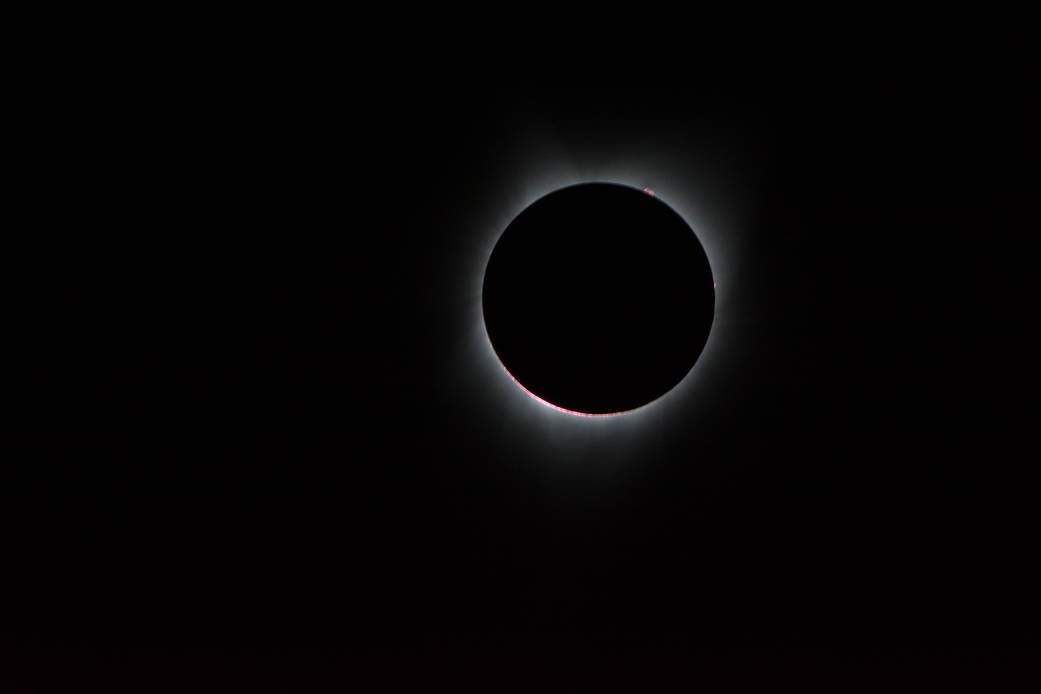
During a total solar eclipse, the Moon hides the bright face of the Sun for a few unforgettable minutes. If you have read our guide to the solar eclipses of 2026 and 2027, you already know these events are more than beautiful sky shows. They are rare chances to see parts of the Sun that normally stay hidden from our eyes, and they point straight to a deeper question: how quantum physics explains sunlight itself.
One of those hidden parts is the corona, the Sun’s faint outer atmosphere. NASA notes that the corona is usually impossible to spot because the Sun’s surface outshines it so completely, and only during totality does it come into view. That single fact raises a deeper question: why is the Sun so bright in the first place?
The answer lives in quantum physics. To understand sunlight, its color, its energy, and even the pale glow of the corona, you need to understand photons, atoms, and the rules that govern matter and light at the smallest scales.
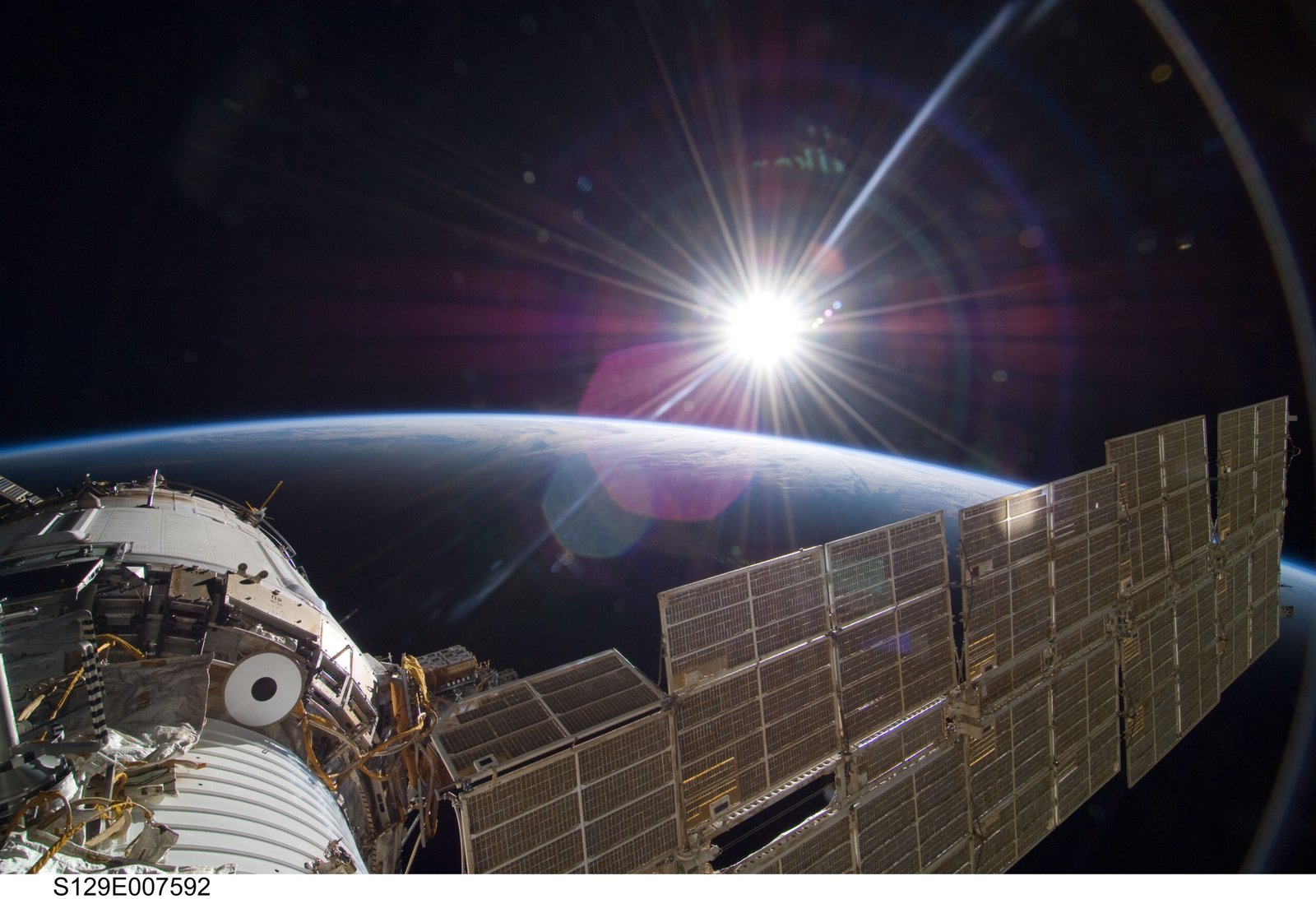
The Sun and a crescent Earth seen together from the International Space Station during the STS-129 mission. Credit: STS-129 Crew, NASA
How Quantum Physics Explains Sunlight
Sunlight looks smooth and continuous, but it arrives in tiny packets of energy called photons. NASA describes electromagnetic radiation as streams of photons, each carrying a specific amount of energy and traveling in a wave like pattern at the speed of light.
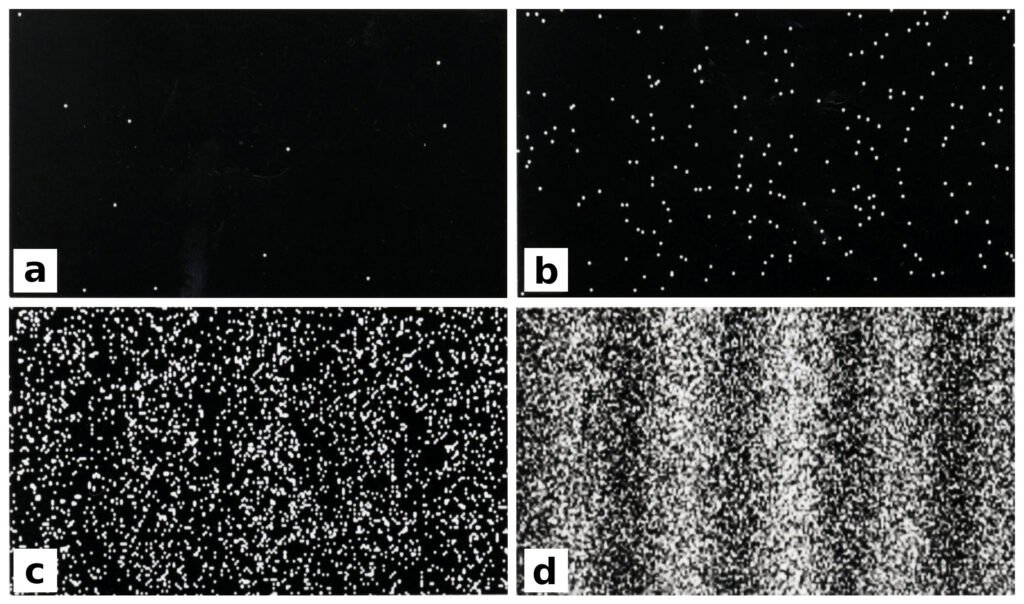
This is why light behaves in two ways at once. It spreads like a wave, which gives us color, wavelength, and interference. It also acts like a particle, because photons arrive one packet at a time.
That wave particle duality sits at the heart of quantum mechanics, which Britannica defines as the science of matter and light at atomic and subatomic scales, including how particles interact with electromagnetic radiation.
So when sunlight reaches your eyes on an ordinary afternoon, you are not simply seeing a yellow disk in the sky. You are catching countless photons that began their journey inside the Sun, crossed 150 million kilometers of space, slipped through Earth’s atmosphere, and finally triggered chemical and electrical signals in your retina.
Why the Sun Emits Light
The Sun shines because energy produced in its core eventually escapes into space as radiation. Its core is a natural fusion engine, where light atomic nuclei merge into heavier ones and release energy in the process.
The U.S. Department of Energy explains that fusion reactions release energy when light nuclei combine into heavier nuclei, and this is the same basic process that powers the Sun and every other star. That energy does not reach us in one clean burst. It works its way outward through the Sun, interacting with matter countless times before it finally leaves the solar surface as electromagnetic radiation.
That same fusion reaction floods space with solar neutrinos, ghostly particles produced by the billions in the Sun’s core that pass through you and the entire Earth almost as if matter were not there, a phenomenon covered in our piece on why neutrinos are nearly impossible to catch.
Quantum physics enters the story because atoms and particles do not trade energy in arbitrary amounts. Energy is absorbed and emitted in fixed packets. Britannica describes a quantum as a discrete natural unit of energy, and light is emitted and absorbed in exactly these discrete amounts, the photons.
This same quantum rule is what keeps every electron in every atom locked into a stable state instead of spiraling into the nucleus, a puzzle unpacked in our article on why electrons don’t fall into the nucleus.
Sunlight is not only an astronomical phenomenon. It is a quantum phenomenon.
Why Sunlight Has Different Colors
White sunlight is a mixture of many colors. NASA explains that sunlight can be separated into its component colors, and that visible light is only a narrow slice of a much wider electromagnetic spectrum that also includes infrared and ultraviolet light.
Each color corresponds to a different wavelength and a different energy. Blue photons carry more energy than red photons, and ultraviolet photons carry more energy than infrared photons.
This is one of the easiest ways to feel quantum physics in everyday life. Red light, blue light, ultraviolet, and infrared are not just different colors or invisible rays. They are photons carrying different amounts of energy.
Seen from space, the Sun appears bright and mostly white because it emits a broad range of visible wavelengths. From the ground, it can look yellow, orange, or red near sunrise and sunset, because Earth’s atmosphere scatters the shorter wavelengths more strongly and lets more of the longer wavelength light reach your eyes.
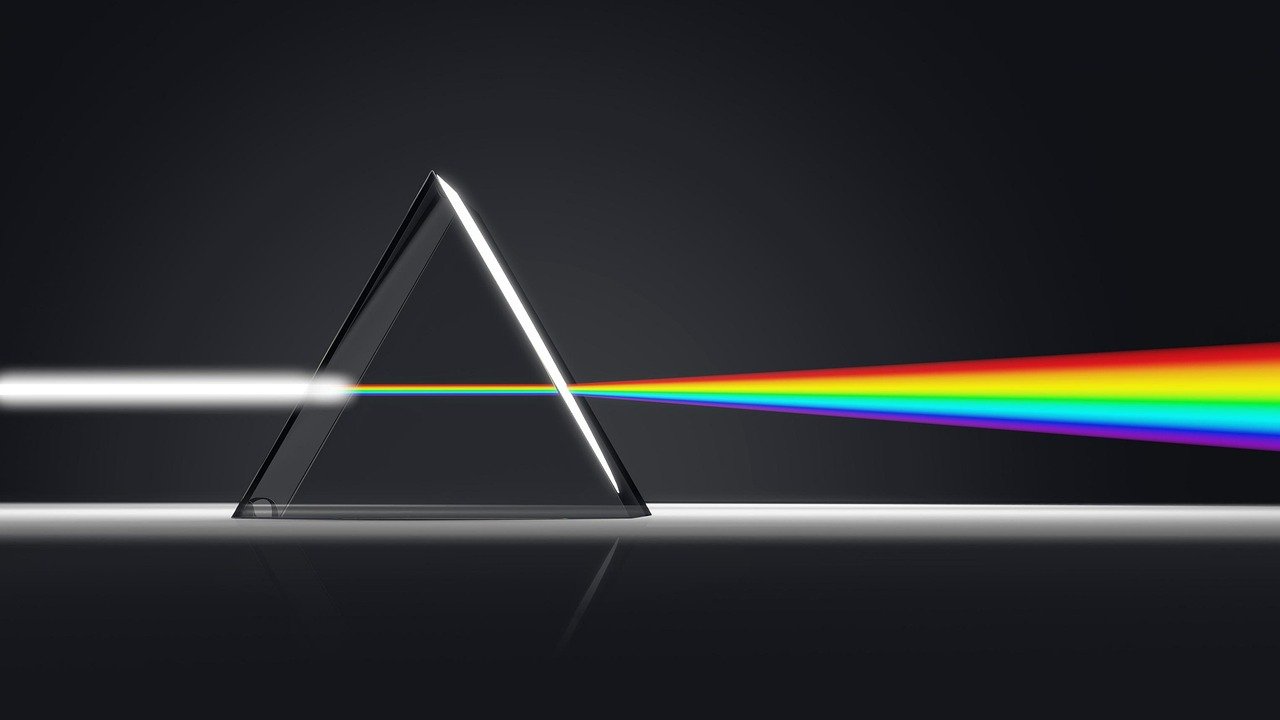
A prism dispersing white light into the visible spectrum. Photo by Daniel Roberts (BlenderTimer) via Pixabay
What Changes During a Solar Eclipse
A solar eclipse changes nothing about how the Sun makes light. The quantum processes inside it carry on exactly as before. What changes is the geometry between the Sun, the Moon, and Earth.
During totality, the Moon blocks the Sun’s bright photosphere from view. NASA explains that once the overwhelming glare of the Sun’s face is removed, the faint corona becomes visible.
This is why eclipses are scientifically valuable. They solve the brightness problem for a few minutes, letting astronomers study faint solar structures that normally sit invisible beside the far brighter solar disk.
Eclipses have done this kind of scientific work before. In 1919, Arthur Eddington used the darkened sky of totality to measure how starlight bends near the Sun’s mass, delivering the first observational proof of general relativity, one of five landmark tests covered in our article on how we know Einstein was right.
It is also why why total solar eclipses reveal the Sun’s corona matters beyond travel planning. Those events give the public a chance to see the corona with their own eyes, and give scientists a rare natural laboratory.
The Corona: The Sun’s Faint Quantum Clue
The corona is the Sun’s outer atmosphere. It is normally drowned out by the light from the Sun’s surface, but it emerges during totality.
The corona is strange because it is extremely hot yet very dim. It reaches temperatures far higher than the solar surface, but it is so thin and diffuse that it produces far less light.
Quantum physics gives scientists the tools to read it, because hot gases and charged particles emit, absorb, and scatter light in very specific ways. NASA’s solar physics material describes the corona seen during total eclipses as a pearly white crown around the Sun, one that also shines in X rays because of its extreme temperature.
In visible light, much of the corona’s glow comes from sunlight scattering off free electrons. NASA’s Solar Data Analysis Center notes that the white light corona seen during a total eclipse is produced by sunlight scattered by coronal electrons.
That makes the corona a bridge between astronomy and quantum physics. What you see is a grand structure wrapped around a star. What its light carries is information about tiny particles, charged gases, and photon interactions.
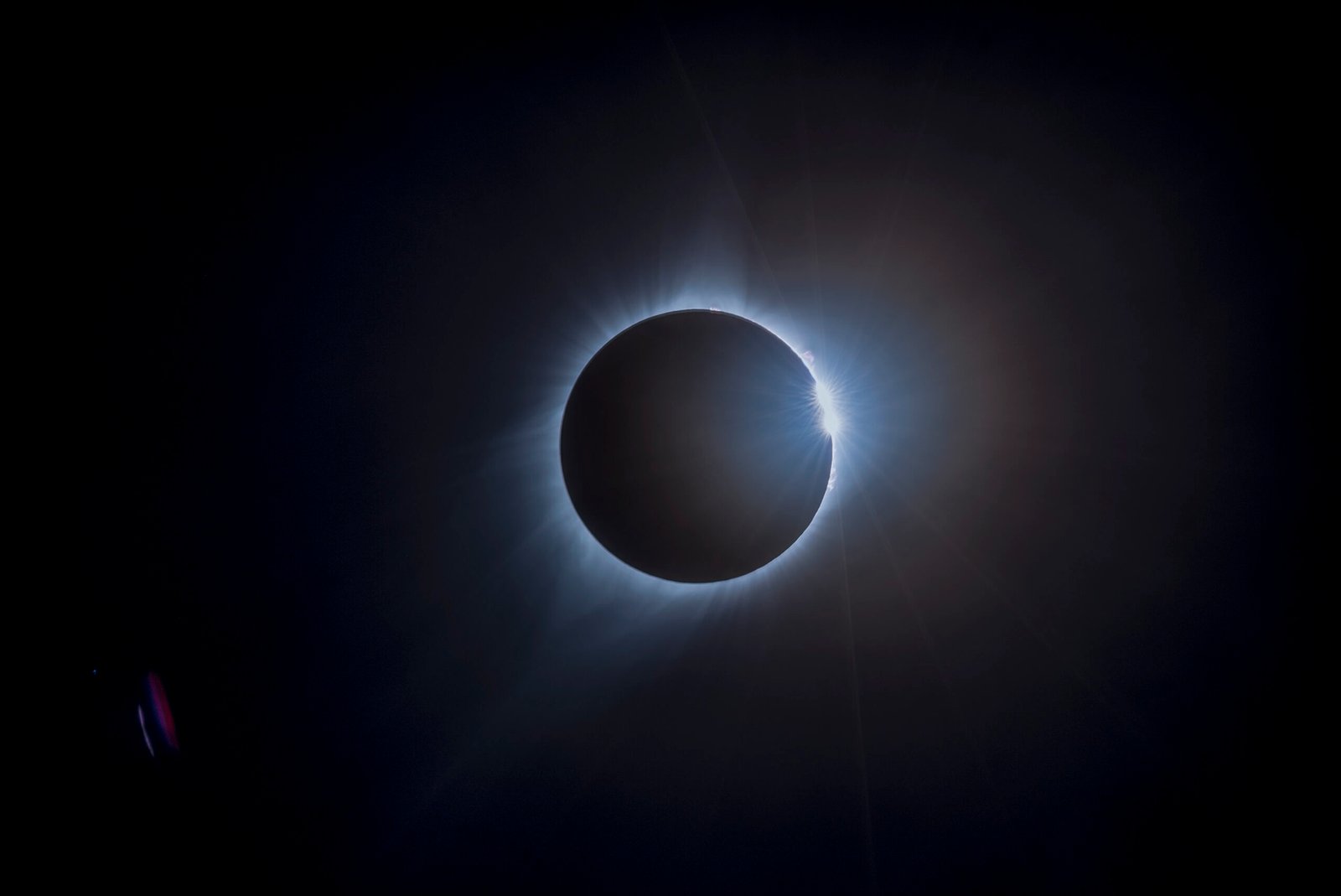
The Sun’s corona forms a brilliant halo around the Moon during the 2017 total solar eclipse, seen from Jefferson City, Missouri. Credit: NASA/Rami Daud, Alcyon Technical Services
Why Photons Matter for Astronomy
Astronomy is, above all, the study of light. Apart from nearby samples and spacecraft measurements, almost everything we know about stars, galaxies, nebulae, and the early universe arrives as photons striking our telescopes.
Spectroscopy separates that light into its component colors and lets scientists read the properties of distant objects. Handled carefully, light reveals temperature, composition, motion, and physical conditions across billions of light years.
Some of that light has been traveling since close to the beginning of the universe, arriving from near the very boundary of what we can ever observe, a limit explored in our piece on what lies beyond the observable universe.
Quantum mechanics is therefore not separate from astronomy. It is one of astronomy’s hidden foundations. Without it, we could still watch eclipses, but we could not fully explain why the Sun shines, why its light forms a spectrum, why different atoms leave fingerprints in that spectrum, or why the corona behaves so differently from the visible surface. Instruments like the telescope filming a ten year movie of the universe depend on exactly this physics.
How This Connects to the 2026 and 2027 Solar Eclipses
The total solar eclipses of 2026 and 2027 will give millions of people a front row view of geometry and physics meeting in the sky. As covered in our guide to the solar eclipses in 2026 and 2027, totality briefly hides the Sun’s bright face and reveals the surrounding corona.
The 2026 event will sweep across parts of Greenland, Iceland, and Spain, while the 2027 eclipse stands out for its long duration across parts of North Africa and the Middle East. NASA lists the August 12, 2026 eclipse as a total solar eclipse visible from Greenland, Iceland, Spain, Russia, and a small area of Portugal.
For readers, these eclipses open a doorway into deeper science. First you learn where and when totality happens. Then you ask what the darkness reveals. Finally you arrive at the quantum question: what is sunlight actually made of?
That is where photons take over the story.
One Photon’s Journey
Follow a single photon leaving the Sun and heading toward Earth. It might belong to the visible light that brightens the sky, or to another part of the spectrum, such as ultraviolet or infrared.
On an ordinary day, that photon might scatter in the atmosphere, warm a rooftop, power a solar panel, or land in your eye. During a total solar eclipse, the Moon may block the direct photospheric light from your location, letting the faint coronal light stand out instead.
The photon is tiny, but its story is enormous. It links nuclear fusion in the Sun, quantum energy packets, planetary alignment, human vision, and astronomical observation in a single unbroken thread.
That is why a solar eclipse is more than the Moon covering the Sun. It is a visible moment where orbital mechanics, solar physics, and quantum mechanics meet.
Why This Matters
Quantum physics can sound abstract, but sunlight makes it tangible. Every sunrise is a quantum event, because the light arrives as photons. Every rainbow is a quantum clue, because color depends on photon energy and wavelength. Every total solar eclipse is a natural experiment, because it removes the brightest solar light and reveals the faint corona.
The Sun remains one of the best classrooms in science. It teaches gravity through orbits, nuclear physics through fusion, electromagnetism through light, and quantum mechanics through photons.
The next time you read about a total solar eclipse, do not think only about the darkness. Think about the light being blocked, the corona being revealed, and the countless photons carrying the Sun’s story across space.
In the end, quantum physics explains sunlight not as a simple glow but as the visible result of photons, atoms, and nuclear processes working together, briefly unmasked by the Moon’s shadow.
Key Takeaways
- Sunlight is made of photons, tiny packets of electromagnetic energy.
- Quantum physics describes how matter and light behave at atomic and subatomic scales.
- The Sun shines because fusion releases energy in its core, and that energy eventually escapes as radiation.
- Different colors of sunlight correspond to photons with different wavelengths and energies.
- A total solar eclipse blocks the bright solar surface and reveals the faint corona.
- The corona’s light carries information about hot plasma, free electrons, and solar activity.
- The 2026 and 2027 solar eclipses are excellent opportunities to connect astronomy, solar science, and quantum physics.
FAQs
What is the quantum physics of sunlight?
Sunlight is not only a wave but also a stream of photons. Each photon carries a specific amount of energy, and that energy depends on the light’s wavelength or frequency.
Why does the Sun emit photons?
Energy produced by fusion in the Sun’s core gradually moves outward and escapes as electromagnetic radiation. Quantum physics explains why that radiation is emitted and absorbed in discrete packets of energy.
What happens to sunlight during a solar eclipse?
Nothing changes at the Sun itself. The eclipse happens because the Moon moves between Earth and the Sun and blocks part or all of the bright solar disk from a viewer’s location.
Why can we see the corona during a total solar eclipse?
The Moon blocks the Sun’s bright photosphere during totality. NASA explains that the corona is normally hidden by the Sun’s surface brightness and only becomes visible during a total solar eclipse.
Is the solar corona related to quantum physics?
Yes. The corona is studied through the light it emits and scatters. That light carries information about hot plasma, electrons, ions, and photon interactions, all of which need quantum physics to fully explain.
Why is this topic important for astronomy?
Astronomy depends almost entirely on light. Quantum physics tells scientists what light is, how atoms produce it, and how telescopes use it to study the Sun, stars, galaxies, and the wider universe.
References
- NASA Space Place, What Is the Sun’s Corona? spaceplace.nasa.gov
- NASA Science, Eclipses. science.nasa.gov
- NASA Science, Future Eclipses. science.nasa.gov
- NASA Imagine the Universe, Electromagnetic Spectrum Introduction. imagine.gsfc.nasa.gov
- NASA Science, Spectroscopy 101: Light and Matter. science.nasa.gov
- NASA Solar Physics, The Emission Line Corona. solarscience.msfc.nasa.gov
- NASA Solar Data Analysis Center, The Corona. umbra.nascom.nasa.gov
- U.S. Department of Energy, DOE Explains Fusion Reactions. energy.gov
- Britannica, Quantum Mechanics. britannica.com
- Britannica, Quantum. britannica.com

Join the discussion
Comments are moderated and may take a little while to appear.